Embryology
كسونا العظام لحمًا
السياق العلمي
تطوّر الهيكل العظمي
In the second century CE, Galenic medicine established the long-held belief that the skeleton simply baked and hardened deep inside a pre-existing mass of soft embryonic flesh. By the late seventeenth century, preformationist naturalists proposed a different explanation, arguing that bones and muscles did not develop in stages at all, but rather expanded simultaneously from a fully formed, microscopic miniature human.
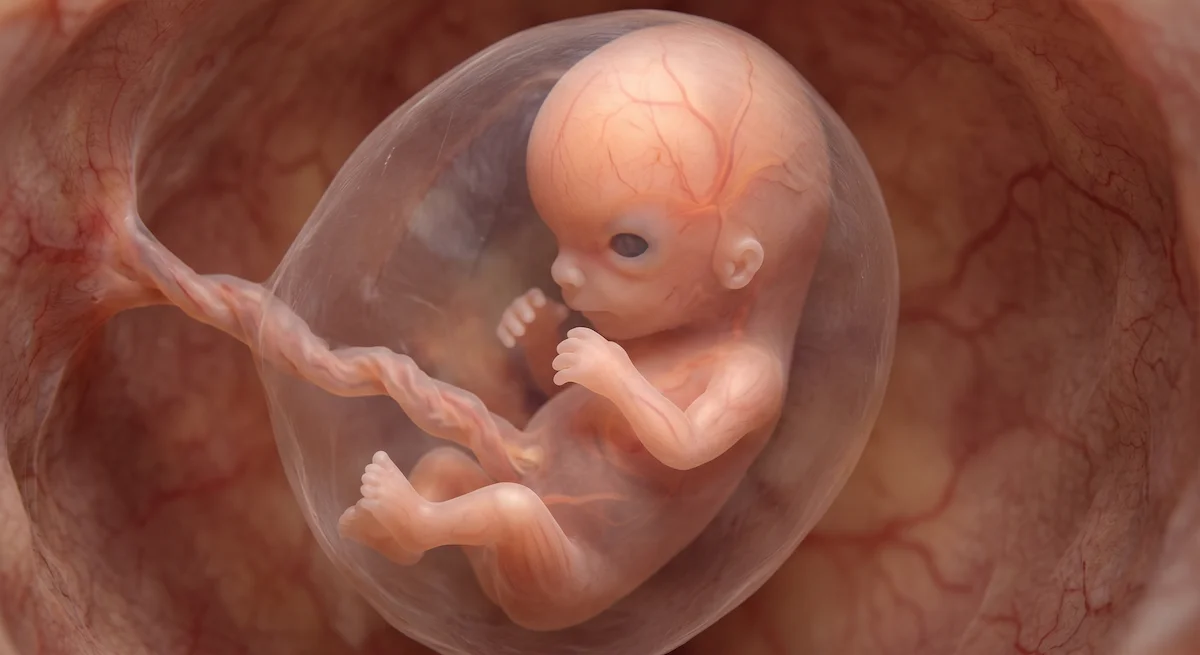
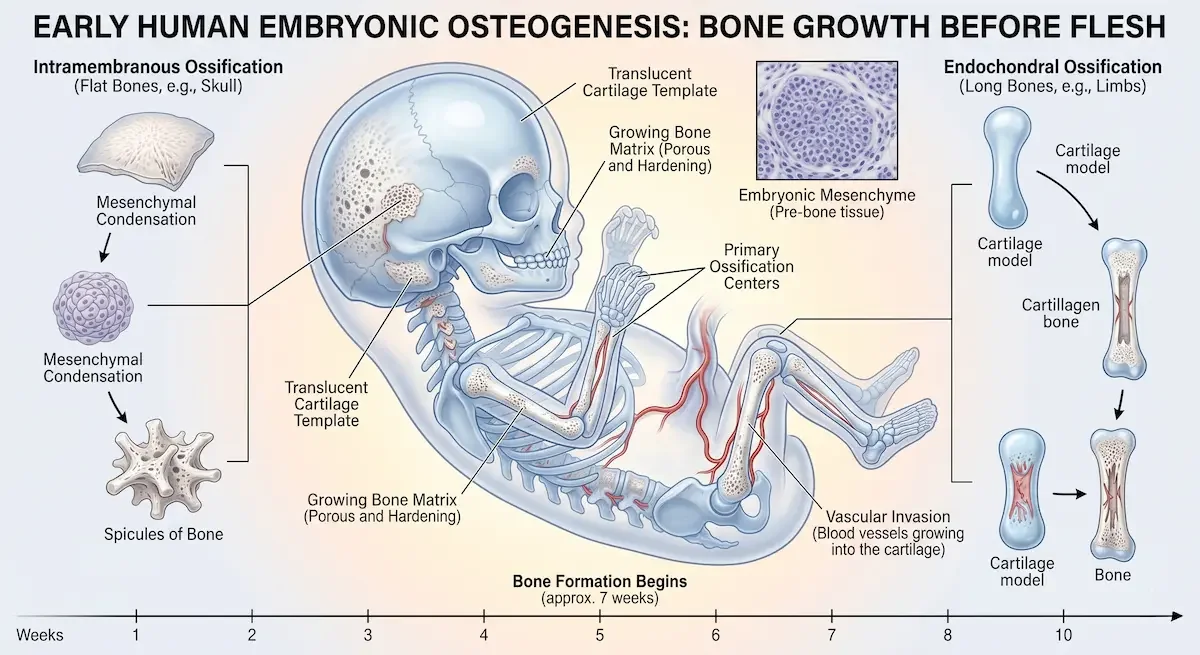
Modern microscopic embryology eventually dismantled these early assumptions and revealed an elegant two-stage sequence. Around the fifth week of embryonic development, loose mesenchymal tissue gathers along the future path of the limbs and spine, condensing into specialized cells that secrete cartilage. By the end of the sixth week, this process sculpts a complete, working miniature of the adult skeleton out of flexible cartilage. Every single bone model is already mapped and situated, from the protective curve of the ribs to the tiny digits of the hands and feet.
Only after this primary structural scaffold stands complete does the second wave of development begin. Starting in the seventh and eighth weeks, invasive microscopic blood vessels penetrate the center of each cartilage model, introducing specialized osteoblasts that initiate the gradual conversion into mineralized bone. At the exact same time, surrounding muscle precursor cells begin fusing into elongated, functional fibers. These new muscle bundles actively migrate toward the pre-existing frame, wrapping around the structural elements and anchoring themselves securely through tendons. Muscle does not generate the bones from within; rather, it envelops an already-finished inner skeleton from the outside.
Confirming this invisible choreography required decades of microscopic breakthrough. Beginning in 1887, anatomist Franklin Mall began gathering and serial-sectioning thousands of human embryos at Johns Hopkins University, founding the world-renowned Carnegie Collection. Building directly upon this histological archive between 1942 and 1951, embryologist George Streeter published the landmark Developmental Horizons in Human Embryos. Streeter’s standardized Carnegie staging system formally codified the embryonic timeline, proving conclusively that skeletal framework formation strictly precedes muscular development.
السياق القرآني
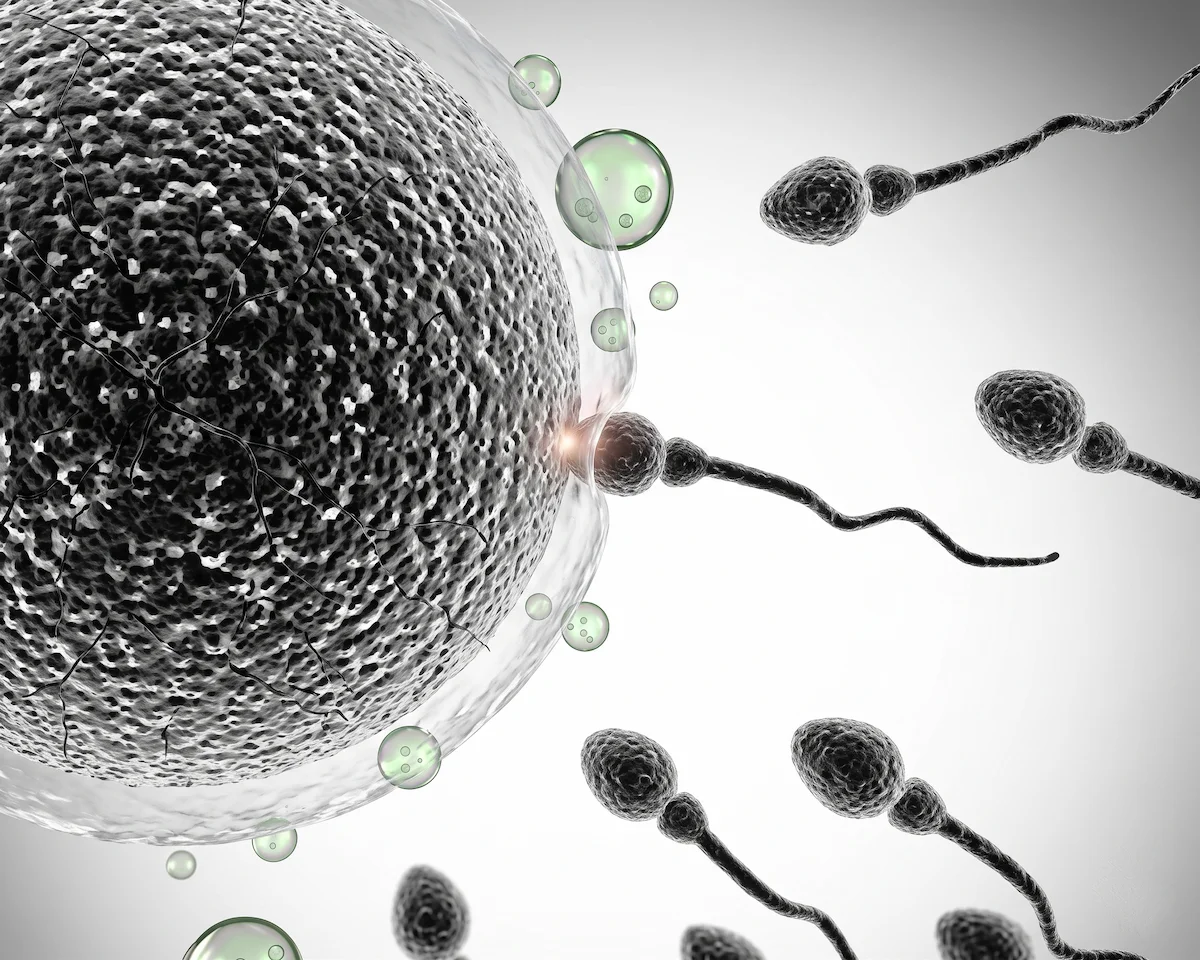
ثُمَّ خَلَقْنَا النُّطْفَةَ عَلَقَةً فَخَلَقْنَا الْعَلَقَةَ مُضْغَةً فَخَلَقْنَا الْمُضْغَةَ عِظَامًا فَكَسَوْنَا الْعِظَامَ لَحْمًا
— القرآن 23:14
This verse, describing human embryonic growth, outlines a four-step developmental sequence governed by a notable linguistic shift. The first three stages are introduced by the verb khalaqa (to create or bring into being): fa-khalaqnā (We created) the drop into a clinging clot, fa-khalaqnā (We created) the clot into a lump, fa-khalaqnā (We created) the lump into bones. The fourth transition abruptly breaks this pattern. Rather than repeating the verb khalaqa, the text introduces kasā, meaning to clothe or drape a garment over a pre-existing form. This sudden grammatical pivot signals a fundamental change in the nature of the act. Flesh is not created, rather it is used to clothe the bones.
Quranic scholars understanding this sequence through meticulous grammatical analysis, firmly set aside the prevalent medical assumptions of the time. The Prophet’s companion Ibn ʿAbbās explained that the phrase functions as a literal anatomical description: developing flesh envelops the skeleton just as clothing fits a body, with the bones providing the indispensable internal foundation. Examining the verse’s syntax, al-Ṭabarī commented that the connecting word fa (and/ so) establishes an unbroken chronological order, proving that the skeleton exists as an articulated whole before receiving its outer layer. The grammarian Al-Zajjāj reinforced this structural logic, noting that specifying the bones in the plural (ʿiẓām) prior to the flesh (laḥm) denotes a fully completed structural template awaiting enclosure.
This linguistic reasoning runs consistently through later classical interpretations. The linguist al-Zamakhsharī observed that the imagery of clothing inherently requires an independent, pre-existing silhouette to give the outer garment its shape. Building upon this insight, Fakhr al-Dīn al-Rāzī argued that the shift from khalaqa to kasā was both deliberate and grammatically necessary. Because the skeleton had already been brought into being as an independent entity, the biological action transformed from generating an inner foundation to wrapping a muscular garment over a completed scaffold.
المقال السابق
Next Post
الخط الزمني المرجعي
600 CE
1000 CE
1500 CE
2000 CE
Quran verse 23:14
615 CE–622 CE
Outlines human embryonic development through a sequential order where an internal skeletal framework is established before being clothed in flesh
175 CE
Galen establishes the classical medical doctrine that the skeleton forms by condensing and hardening deep inside a pre-existing mass of soft embryonic flesh
Galen, De Foetuum Formatione
687 CE
Ibn ʿAbbās explains that developing flesh envelops the skeleton the way a garment is draped over a pre-existing body
Tafsīr Ibn ʿAbbās
923 CE
Al-Ṭabarī and Al-Zajjāj analyze the verse's syntax, noting that the connective particle (fa-) and plural bones (ʿiẓām) establish a completed structural scaffold before receiving flesh
Jāmiʿ al-Bayān & Maʿānī al-Qurʾān
1144 CE
Al-Zamakhsharī observes that the imagery of clothing (kasā) inherently requires an independent pre-existing silhouette to give the garment shape
Al-Kashshāf
1210 CE
Fakhr al-Dīn al-Rāzī notes that the verb shifts from creation (khalaqa) to clothing (kasā) because the skeletal frame has already been brought into being
Mafātīḥ al-Ghayb
1677 CE
Preformationist naturalists argue that bones and muscles develop simultaneously, expanding from a fully formed microscopic miniature human rather than in chronological stages
Early European embryology
1887 CE
Franklin P. Mall begins gathering and serial-sectioning human embryos at Johns Hopkins University, establishing the Carnegie Collection
Carnegie Institution of Washington
1951 CE
George L. Streeter completes the Carnegie Stages of human embryology, proving a standalone cartilaginous skeleton forms by the sixth week before muscle fibers migrate and surround it
Developmental Horizons in Human Embryos
وجه الارتباط
The Qur’anic text presents embryonic development as a sequential process where an internal skeleton is established before being clothed in flesh. Twentieth-century embryology documents that anatomical growth follows this same order, a standalone cartilaginous scaffold is completed by the sixth week of gestation before muscle fibers actively migrate and anchor around it from the outside.
روابط ذات صلة