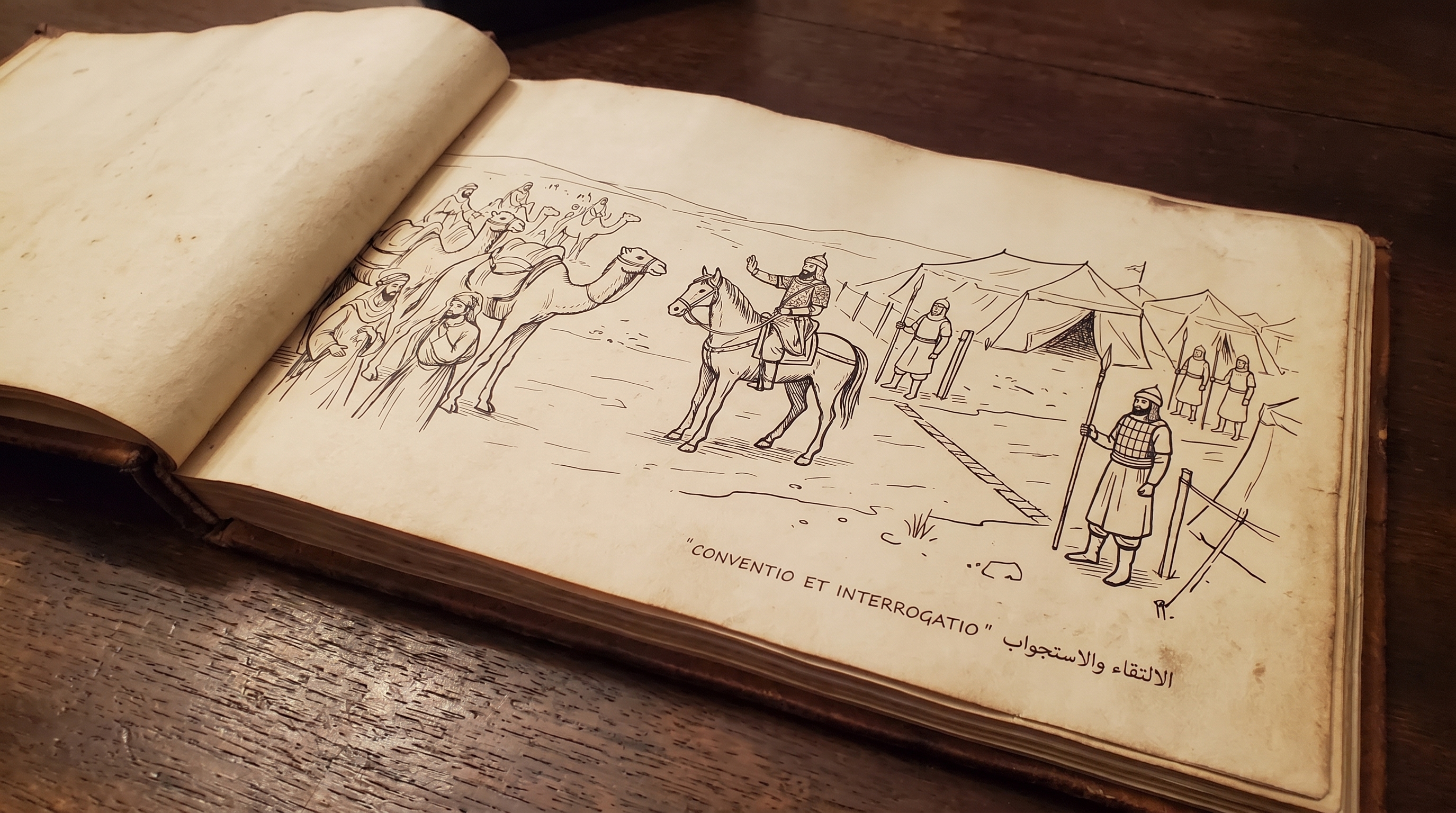
The Contagion Cordon
Mark as readPalestine → Bukhara (Uzbekistan) → Al-Andalus (Spain) → Ottoman ports → Venice
Prophetic guidance → Public healthOverview
The Prophet ﷲ instructed: “If you hear of plague in a land, do not enter it; and if it occurs where you are, do not leave” (Bukhari & Muslim), and “do not mix the sick with the healthy” — guidance that treated transmission as a physical reality. Centuries before modern microbiology, that prophetic counsel laid the foundation for systematic epidemic containment and the empirical defense of contagion.
First recorded policy
639 CE: Caliph ʿUmar’s council halts the army at Sargh outside Syria during the Plague of Amwās — establishing one of the earliest documented state-level sanitary cordons in the post-classical world.
Codified as medicine
Ibn Sīnā’s Canon (c. 1025) identified tainted air and bodily secretions as vectors of transmission, laying theoretical groundwork for isolating contagious patients in hospital wards.
Empirical defense
During the Black Death, Ibn al-Khaṭīb of Granada (1349) boldly defended contagion against mainstream denial, proving transmission through garments, vessels, and physical contact.
Sources
- Sahih al-Bukhari 5707, 5728; Sahih Muslim 2218
- Ibn Sīnā, al-Qānūn fī al-Ṭibb (c. 1025)
- Ibn al-Khaṭīb, Muqniʿat al-Sāʾil (1349)
- N. Varlik, Plague and Empire in the Early Modern Ottoman World