Physics
Creation in Pairs
Scientific Context

The Universal Architecture of Pairs
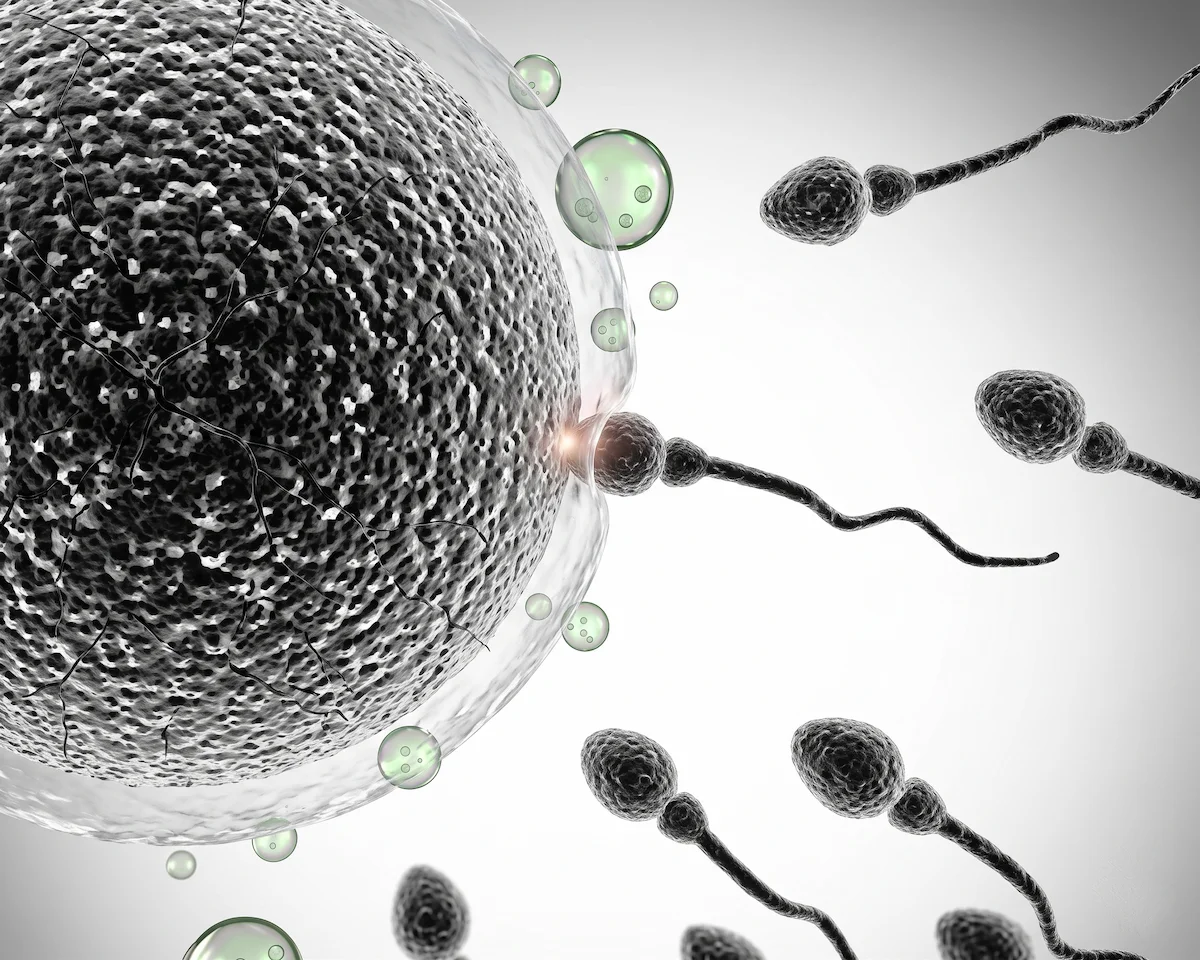
Look across any branch of the living world, and nature organizes itself around pairs. In animals, plants, and insects, reproduction depends on the union of two complementary organisms. Exactly how this split was determined, however, remained a mystery until 1905, when American geneticist Nettie Stevens discovered sex chromosomes. Stevens showed that biological sex is set by a paired genetic handoff—XX or XY in mammals, with similar paired systems operating across birds, reptiles, and plants.
On the molecular level that same pattern repeats. DNA is literally built as a pair. When James Watson and Francis Crick mapped the double helix in 1953—drawing on Rosalind Franklin’s landmark X-ray diffraction images—they found two strands coiled around each other like a spiral staircase. The steps of that staircase follow an absolute rule of pairing: adenine bonds only with thymine, and guanine bonds only with cytosine. This strict matching is the very engine of heredity. When a cell divides, the double helix unzips, and each single strand acts as an exact physical mold to rebuild its missing partner, passing biological memory intact to the next generation.
Even in the subatomic realm, pairing becomes the foundational rule of physical matter itself. In quantum physics, pure energy cannot convert into matter in isolation; it must create a particle alongside an antiparticle twin. In 1928, British physicist Paul Dirac noticed something startling in his equations: quantum mechanics demanded that every fundamental particle have a mirrored counterpart with identical mass but opposite charge. Four years later, in 1932, Carl Anderson proved Dirac right when he discovered the positron—the positively charged twin of the electron—in cosmic-ray tracks at Caltech. Today, every elementary particle in the Standard Model is confirmed to exist in tandem with an antiparticle partner.
From matter and antimatter to positive and negative charges, and from matching DNA strands to whole organisms, the universe repeats the same fundamental logic. Two distinct parts, each defined by what the other lacks, come together to make a stable system that neither could sustain on its own. Pairing is not an isolated quirk of biology or an afterthought of physics; it is the underlying blueprint of the physical world across every scale we can measure.
Islamic Context
سُبْحَانَ الَّذِي خَلَقَ الْأَزْوَاجَ كُلَّهَا مِمَّا تُنبِتُ الْأَرْضُ وَمِنْ أَنفُسِهِمْ وَمِمَّا لَا يَعْلَمُونَ
Exalted is He who created all pairs — from what the earth grows and from themselves and from that which they know not.
— Quran 36:36
This verse opens with an uncompromising statement of scope: Subḥāna alladhī khalaqa al-azwāja kullahā—"Glory be to the One who created all pairs." In classical Arabic, the word zawj (mate) is used for spouse but the word accurately describes a counterpart; any element that requires a partner to form a complete, working unit. The earliest Quranic authority, the Prophet’s companion Ibn Abbas (d. 687), noted that the word kullahā ("all of them") is absolute. Ibn Abbas explained that pairing is not a poetic accident, but the universal rule of the material world. By giving every created thing a counterpart, nature visibly demonstrates that only the Creator is Singular, complete in Himself, and free from any partner.
The passage then divides this universal rule into three distinct tiers. The first two, mimmā tunbitu al-arḍ (what the earth grows) and wa-min anfusihim (from themselves), cover the visible dualities of plant reproduction and animal life that any ancient observer could see. But the third clause turns into uncharted territory: wa-mimmā lā yaʿlamūn ("and from that which they know not.") The early eighth-century scholar Mujahid ibn Jabr (d. 722) pointed out that this final phrase is the real engine of the verse. It is not closing filler; it is an open frontier. Mujahid observed that the text intentionally pushes the principle of pairs beyond the horizon of visible nature, asserting that pairing operates in hidden domains the first audience had no way of identifying.
This universal blueprint is reinforced in Surah Adh-Dhariyat: "And of all things We created pairs, that perhaps you may reflect" (51:49). Early commentators like Qatadah (d. 736) noted that this law spans the entire natural order: night and day, sky and earth, dry land and sea. Centuries later, Fakhr al-Din al-Razi (d. 1210) argued that being one half of a pair is direct proof of dependency. An isolated counterpart cannot balance, reproduce, or function on its own; it requires its missing half. Across both visible biology and unseen realms, creation is built in pairs to show that the physical world is made of dependent parts rather than self-sufficient wholes.
Prev Post
Next Post
Reference Timeline
600 CE
1000 CE
1500 CE
2000 CE
Quran verse 36:36
615 CE–632 CE
Describes the universal creation of all things in pairs across plant life, living creatures, and unknown realms
687 CE
Ibn ʿAbbās explains that universal pairing is an absolute rule of the physical world, serving as proof that the Creator alone is Singular and without counterpart
Ibn ʿAbbās (d. 687), recorded in Jāmiʿ al-Bayān
722 CE
Mujāhid ibn Jabr identifies the clause 'from that which they do not know' as an open frontier, asserting that pairing extends into unobservable domains
Mujāhid ibn Jabr (d. 722), Tafsīr Mujāhid
736 CE
Qatādah documents that fundamental natural dualities—including night and day, sky and earth, and sea and land—reflect the universal law of pairs
Qatādah ibn Diʿāmah (d. 736), recorded in Tafsīr al-Ṭabarī
1210 CE
Fakhr al-Dīn al-Rāzī argues that paired existence is structural proof of dependency, as no counterpart possesses self-sufficiency on its own
Fakhr al-Dīn al-Rāzī (d. 1210), Mafātīḥ al-Ghayb (Tafsīr al-Kabīr)
1694 CE
Rudolf Jakob Camerarius publishes De Sexu Plantarum Epistola, experimentally demonstrating that plants reproduce through distinct male and female organs
Rudolf Jakob Camerarius, De Sexu Plantarum Epistola (1694)
1733 CE
Charles François de Cisternay du Fay discovers two opposing forms of electrical charge, establishing dual polarity as a foundation of electromagnetic forces
Charles François de Cisternay du Fay, Mémoires de l'Académie Royale des Sciences (1733)
1905 CE
Nettie Stevens discovers sex chromosomes, resolving the physical mechanism of sex determination through paired genetic combinations
Nettie Stevens, Studies in Spermatogenesis (1905)
1928 CE
Paul Dirac formulates the relativistic wave equation, mathematically predicting that every fundamental particle of matter possesses an antimatter twin
P. A. M. Dirac, The Quantum Theory of the Electron (1928)
1932 CE
Carl Anderson identifies the positron in cosmic-ray cloud-chamber tracks at Caltech, experimentally confirming the physical existence of antimatter pairs
Carl D. Anderson, Physical Review (1933, observation 1932)
1953 CE
James Watson and Francis Crick map the double-helix geometry of DNA, proving genetic replication operates through strict, complementary base pairing
J. D. Watson & F. H. C. Crick, Nature (1953)
The Connection
Modern science reveals that the cosmos operates on a universal architecture of pairs, from the antimatter twins of quantum physics to the complementary rungs of DNA. This mirrors the Quranic principle of azwāj—the rule that creation is built from counterparts that require a partner to achieve stability and function. While science maps how these dualities sustain the natural order, classical commentators recognized what they signify: every created component is fundamentally incomplete on its own, depending on a counterpart to find balance within the larger fabric of existence.
Related Connections