Bioscience
A Syrup for Healing - Part 1
Scientific Context
The Origin of Honey
Every modern schoolchild is taught that bees make honey, but for most of Western history, its origin was an unresolved mystery. In the fourth century BCE, Aristotle explained in History of Animals that honey fell from the morning sky as sweet dew that was then collected by bees. Four centuries later, Seneca the Younger noted that some observers suspected bees transformed floral nectar from within, but Pliny the Elder reaffirmed the celestial orthodoxy in his Natural History, famously debating whether honey was "the sweat of the heavens" or "the saliva of the stars." In the end, Aristotle's theory of celestial origin remained dominant and was standard scientific teaching across Europe until the invention of high-powered microscopy.
In the 1670s, Dutch microscopist Jan Swammerdam conducted microscopic dissections of worker bees, proving that bees carried collected nectar internally inside a holding sac in the abdomen, rather than carrying drops externally on their legs or bodies. Simultaneously, botanists studying flowers under magnification identified specialized glands that actively secrete sweet liquid. This dealt a major blow to the celestial dew theory: plants were not catching sugar falling from the stars; they were manufacturing nectar themselves. In 1740, French naturalist René Réaumur published the fifth volume of Memoirs Serving for a History of Insects, revealing the honeybee's internal organs and demonstrating the physical process of honey production.
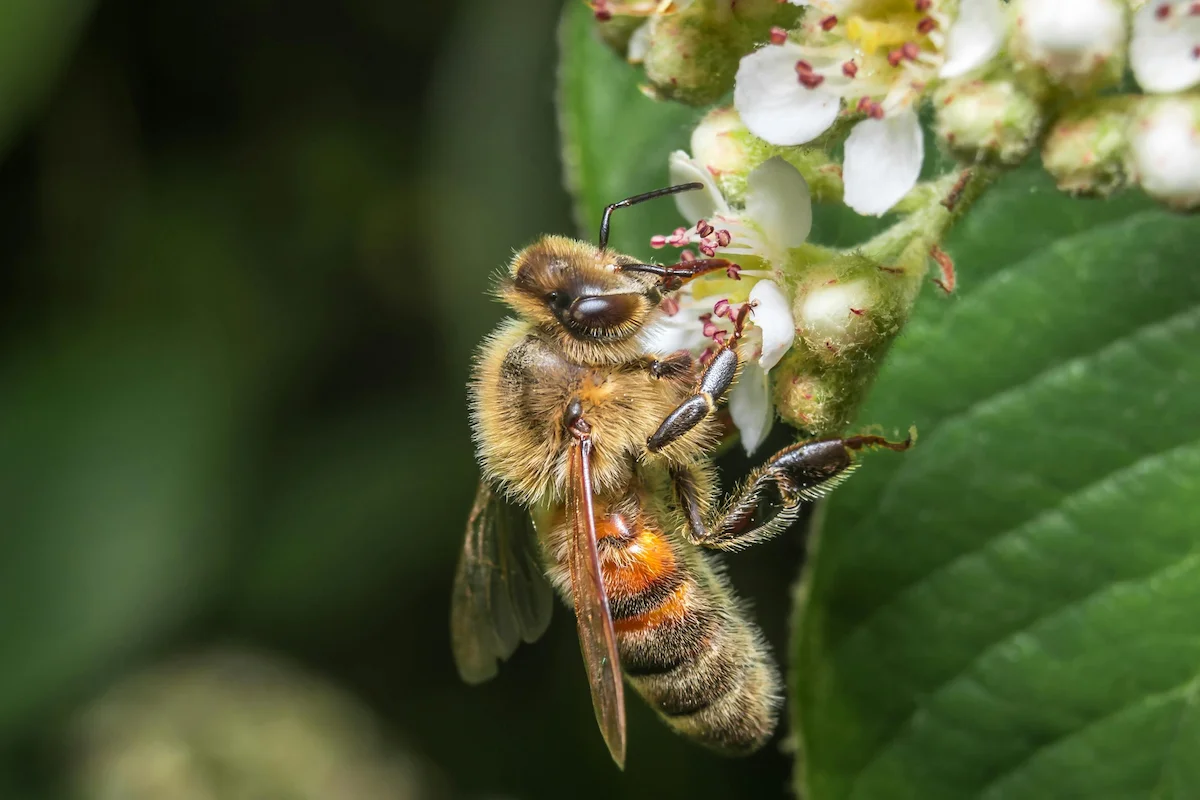
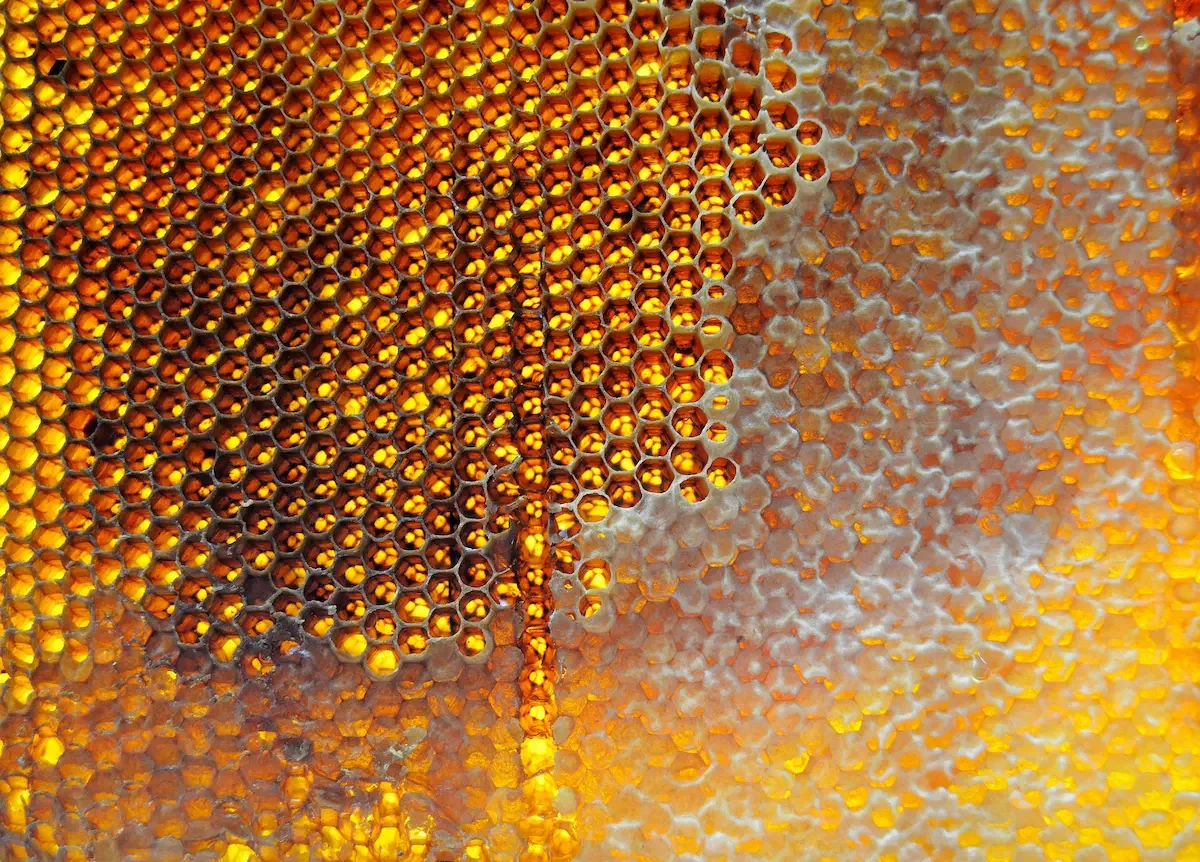
When a bee sips floral nectar, the fluid does not enter its digestive stomach. Instead, it passes into a specialized holding organ inside the insect's abdomen: the honey sac, or crop. A muscular one-way valve seals this pouch off from the digestive midgut, keeping the harvest completely separate from metabolic waste. Inside this abdominal chamber, the bee begins processing the fluid, blending it with internal secretions that initiate the breakdown of complex plant sugars. Back at the colony, worker bees evaporate excess moisture through rapid wing-fanning, condensing the liquid into a dense, shelf-stable syrup. Because honeybees forage across a vast spectrum of flowering plants—from clover and orange blossom to buckwheat and forest wildflowers—the syrup absorbs the distinct chemical fingerprint of its botanical source. Different blossoms infuse the liquid with varying ratios of minerals, aromatic compounds, and plant pigments. The result is a finished syrup that emerges in a striking spectrum of colors, ranging from water-white and pale straw to rich golden amber and deep, opaque mahogany.
Islamic Context
... يَخْرُجُ مِن بُطُونِهَا شَرَابٌ مُّخْتَلِفٌ أَلْوَانُهُ فِيهِ شِفَاءٌ لِّلنَّاسِ إِنَّ فِي ذَٰلِكَ لَآيَةً لِّقَوْمٍ يَتَفَكَّرُونَ ٦٩
...There emerges from their insides a syrup, varying in color, in which there is healing for humankind. Indeed, in that is a sign for a people who give thought.
— Quran 16:69
In this verse, the Qur’anic description of honey is centered on a precise physical origin: “There emerges from their insides a syrup, varying in color” (16:69). The text does not describe honey as something gathered from the outside, but as an internal secretion produced from within the insect’s own body.
Early commentators paid close attention to this phrasing. In the eighth century, Muqātil ibn Sulaymān (d. 767), and subsequently the grammarian al-Farrāʾ (d. 822), emphasized that the phrase min buṭūnihā (from their abdomens) grammatically anchors the substance to the insect’s internal anatomy, recording that the syrup is physically formed and held within the bee before being expelled through its mouth. The ninth-century naturalist al-Jāḥiẓ (d. 868) and the grammarian al-Zajjāj (d. 923) expanded on the term sharāb (syrup or potable drink), marveling at the contrast between input and output: a delicate creature feeds on raw, often bitter botanical forage, yet yields an incorruptible, sweet fluid that neither sours nor decays.
The most exhaustive classical study of this verse came from the theologian Fakhr al-Dīn al-Rāzī (d. 1210), who devoted a significant portion of his commentary to the behavior and physiology of bees. Addressing the prevailing natural philosophy of his era, al-Rāzī noted that many naturalists claimed honey was not produced by the bee at all but was merely atmospheric dew that condensed onto leaves for worker bees to gather. Al-Rāzī argued that the text directly refutes this passive model. The explicit specification of min buṭūnihā (from their insides), he maintained, proves that honey undergoes a complete internal transmutation (istiḥālah) inside the insect. For al-Rāzī, the bee was not a simple transporter of external moisture, but an active vessel whose internal faculties fundamentally alter the botanical fluids it ingests.
Classical scholars linked this internal processing directly to the syrup’s physical diversity mukhtalifun alwānuhu (varying in color). In the earliest recorded traditions, both Mujāhid (d. 722) and Qatādah (d. 736) observed that because bees are commanded to graze across diverse vegetation (min kulli al-thamarāt), the finished syrup naturally mirrors its diet. The internal synthesis yields a broad chromatic spectrum—from pale white and golden yellow to deep red and black—varying according to the distinct soils, blossoms, and seasons of the harvest.
Prev Post
Next Post
Reference Timeline
500 BCE
1 CE
600 CE
1000 CE
1500 CE
2000 CE
Quran verse 16:69
615 CE–622 CE
Identifies honey as an internally generated syrup emerging from the insides of bees, with diverse colors governed by botanical forage
350 BCE
Aristotle asserts in History of Animals that honey falls from the atmosphere as morning celestial dew and is collected by bees
Aristotle, History of Animals
65 CE
Seneca the Younger records an active debate among naturalists over whether bees merely collect floral nectar or internally transform what they gather
Seneca, Epistulae Morales ad Lucilium
77 CE
Pliny the Elder reaffirms the celestial doctrine in Natural History, debating whether honey is the sweat of the heavens or saliva of the stars
Pliny the Elder, Natural History
722 CE
Mujāhid (d. 722) and Qatādah (d. 736) observe that honey's chromatic variation (white, yellow, red, and black) directly mirrors the diverse flora grazed by the bees
Early tafsīr traditions via al-Ṭabarī (d. 923)
767 CE
Muqātil ibn Sulaymān (d. 767) and al-Farrāʾ (d. 822) explain that min buṭūnihā denotes internal processing and retention in the abdominal cavity prior to oral expulsion
Tafsīr Muqātil & Maʿānī al-Qurʾān
868 CE
Al-Jāḥiẓ (d. 868) and al-Zajjāj (d. 923) note the physical marvel of honey synthesis, where bitter plant juices are converted into an incorruptible sweet syrup
Kitāb al-Ḥayawān & Maʿānī al-Qurʾān
1210 CE
Fakhr al-Dīn al-Rāzī (d. 1210) refutes the falling dew theory, arguing that min buṭūnihā proves nectar undergoes an internal transmutation (istiḥālah)
Mafātīḥ al-Ghayb
1675 CE
Jan Swammerdam conducts microscopic dissections of bees, demonstrating that nectar is transported internally inside an abdominal holding sac
Biblia Naturae
1740 CE
René Réaumur publishes anatomical dissections mapping the proventriculus valve, proving honey is an internal biological manufacture
Mémoires pour servir à l’histoire des insectes
The Connection
The Qur’anic account describes honey as an internal secretion produced within the bee’s body, varying in color according to its botanical forage. Microscopic dissection and modern entomology dismantled the classical belief that honey was celestial sky-dew, proving that nectar is gathered into an abdominal honey sac, isolated from digestion, and chemically transformed by internal secretions into honey whose chromatic variety directly reflects the diverse flora grazed by the hive.
Related Connections