Bioscience
Every Living Thing
Scientific Context
Water's Universal Role in Biological Systems
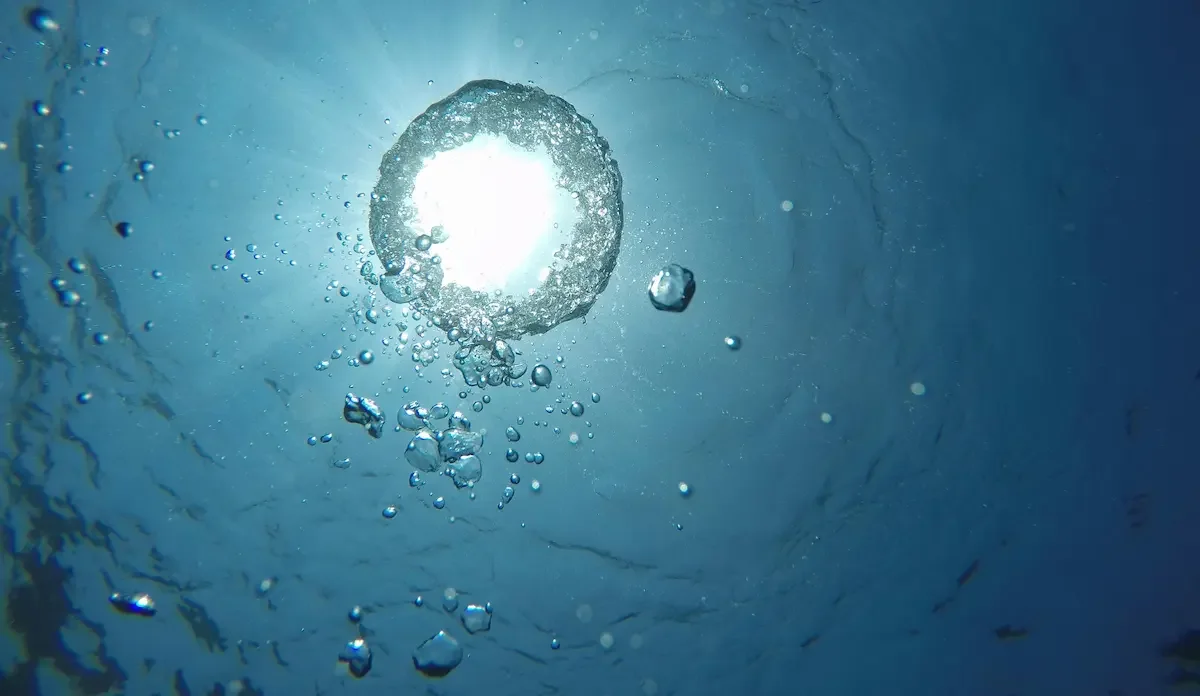
When modern astrophysicists search the universe for extraterrestrial life, they do not look for biological signatures directly; they look for liquid water. This strict methodological standard, formally codified by NASA in 1998 as the "Follow the Water" astrobiology strategy, exists because life, mechanically and structurally, cannot operate in a dry state. Water is often thought of as a simple liquid that living things need to drink, but biology requires it to be much more than that. It is the fundamental physical scaffolding of biological activity.
Although Thales of Miletus (c. 585 BCE) proposed that water was underlying substance of all matter, his model was refuted by Empedocles (c. 430 BCE) who suggested the four-element model (earth, air, fire, water) which was adopted and remained in place for almost two thousand years. The modern scientific realization that living things are fundamentally constructed from water began in 1648 after the publication of Jan Baptist van Helmont's experiment led him to theorize that water made up the biological mass of plants (he carefully documented the weight of a tree with its soil at planting and after 5 years of being given nothing but water.)
In 1913, Harvard biochemist Lawrence J. Henderson became one of the first to prove that biology physically requires water's unique chemical properties to exist at all. Because water molecules are asymmetrical (shaped like a V, with two hydrogen atoms on one side and an oxygen atom on the other), they carry a slight electrical charge and act like microscopic magnets. This polarity allows water to pull apart and dissolve more substances than any other liquid and creates the perfect, active medium where thousands of different chemicals can collide, interact, and form the complex reactions necessary for life.
For decades, biologists treated water inside the cell as just a passive background fluid, where the real work was done by proteins and DNA. In 1957, Nobel laureate Albert Szent-Györgyi formally described water as the "matrix of life," recognizing that it actively drives cellular architecture rather than just serving as a backdrop.
Because water pushes away oil-like substances, it forces lipid molecules to spontaneously organize into the protective membranes that form every cell wall. The same mechanical pressure forces proteins and DNA to fold into their exact, necessary three-dimensional shapes. Without the constant electromagnetic push and pull of surrounding water molecules, the genetic code collapses into a useless, tangled string. From the simplest bacterium to the human brain, water is an active, structural participant in every living mechanism.
Islamic Context
أَوَلَمْ يَرَ الَّذِينَ كَفَرُوا أَنَّ السَّمَاوَاتِ وَالْأَرْضَ كَانَتَا رَتْقًا فَفَتَقْنَاهُمَا وَجَعَلْنَا مِنَ الْمَاءِ كُلَّ شَيْءٍ حَيٍّ أَفَلَا يُؤْمِنُونَ
Do they not see, those who repudiate, that the heavens and the earth were stitched together, and We burst them apart and We made from water every living thing? So then, will they not have faith?
— Quran 21:30
The Quran frames water not as a mere supplement to life, but as its essential building block. The Arabic phrasing is structurally precise. By using the totalizing noun kull (every), the text leaves no room for exceptions across the biological spectrum. The preposition min (from or out of) establishes a dual relationship: it identifies water as both the absolute point of origin and the primary material substance. Furthermore, the verse uses the verb jaʿalna (We made or established) rather than khalaqa (We created from nothing). This specific verb choice positions water as the physical infrastructure that all living entities are constructed upon.
This material reading was established from the earliest days of Islamic scholarship, driven by the Prophet Muhammad himself. When Abu Hurayrah (d. 681) explicitly asked, "From what was everything created?" the Prophet answered, "Everything was created from water." This exchange set a literal baseline. Early commentators did not treat the Quranic verse as a poetic metaphor. The eighth-century scholar Qatādah ibn Diʿāmah (d. 735) grounded his interpretation directly in this literal reality, stating unequivocally that water is the actual, physical source material from which all creatures are generated.
As Islamic scholarship systematically compiled its early transmissions, this interpretation became the definitive standard. Muhammad ibn Jarir al-Tabari (d. 923) documented these early narrations to cement the orthodox consensus: water is the literal biological substrate of the physical world.
Later commentators analyzed the broader implications of this shared foundation. Fakhr al-Din al-Razi (d. 1210) observed that the absolute phrasing of the verse deliberately dismantles the perceived boundaries between different types of organisms. Because every living thing—without exception—shares the exact same aqueous origin, Razi argued that the verse exposes a profound material unity underlying the vast, visible diversity of the natural order.
Prev Post
Next Post
Reference Timeline
500 BCE
1 CE
600 CE
1000 CE
1500 CE
2000 CE
Quran verse 21:30
615 CE–621 CE
The Quran empirically states "We made from water every living thing"
585 BCE
Greek philosopher Thales of Miletus proposes that water is the foundational substance (arche) of the universe, observing that the nourishment of all things is moist
Thales of Miletus (c. 585 BCE)
430 BCE
Empedocles (c. 430 BCE) proposes that there is not one fundamental substance, but four in equal amounts: earth, water, air, and fire. It becomes the predominant opinion for almost 2000 years
Empedocles (c. 430 BCE) - Peri Physeos
681 CE
Abu Hurayrah records the Prophet establishing a literal baseline for the verse, explicitly stating that absolutely everything was created from water
Abu Hurayrah (d. 681)
735 CE
Qatādah grounds the verse in literal physical reality, stating unequivocally that water is the actual source material from which all creatures are generated
Qatādah ibn Diʿāmah (d. 735)
923 CE
Al-Tabari documents early prophetic narrations to cement the orthodox consensus that water acts as the literal biological substrate of the physical world
Al-Tabari (d. 923)
1210 CE
Al-Razi observes the verse's phrasing dismantles biological boundaries, exposing a profound material unity underlying the vast diversity of the natural order
Fakhr al-Din al-Razi (d. 1210)
1648 CE
Jan Baptist van Helmont publishes his willow tree experiment, demonstrating through quantitative measurement that a plant's biological mass is derived primarily from water
Jan Baptist van Helmont (1648)
1913 CE
Lawrence J. Henderson publishes 'The Fitness of the Environment', proving that biology physically requires water's unique asymmetrical chemical properties to exist
Lawrence J. Henderson (1913)
1957 CE
Nobel laureate Albert Szent-Györgyi describes water as the 'matrix of life', recognizing that it actively drives cellular architecture rather than acting as a passive fluid
Albert Szent-Györgyi (1957)
1998 CE
NASA formally codifies the 'Follow the Water' astrobiology strategy, establishing a strict methodological standard that life structurally cannot operate in a dry state
NASA (1998)
The Connection
The Quranic declaration that every living thing is made from water finds an absolute parallel in modern biology. Water comprises up to 90 percent of every organism's mass, serves as the universal medium for all biochemical reactions, and provides the architecture for the cell's physical structure. The verse's precise linguistic emphasis on water as both the origin point and the structural foundation of biology perfectly aligns with the scientific finding that life, in any observable form, could not exist without this seemingly simple molecule.
Related Connections