Embryology
A Clinging Clot
Scientific Context
The Stages of Fetal Development
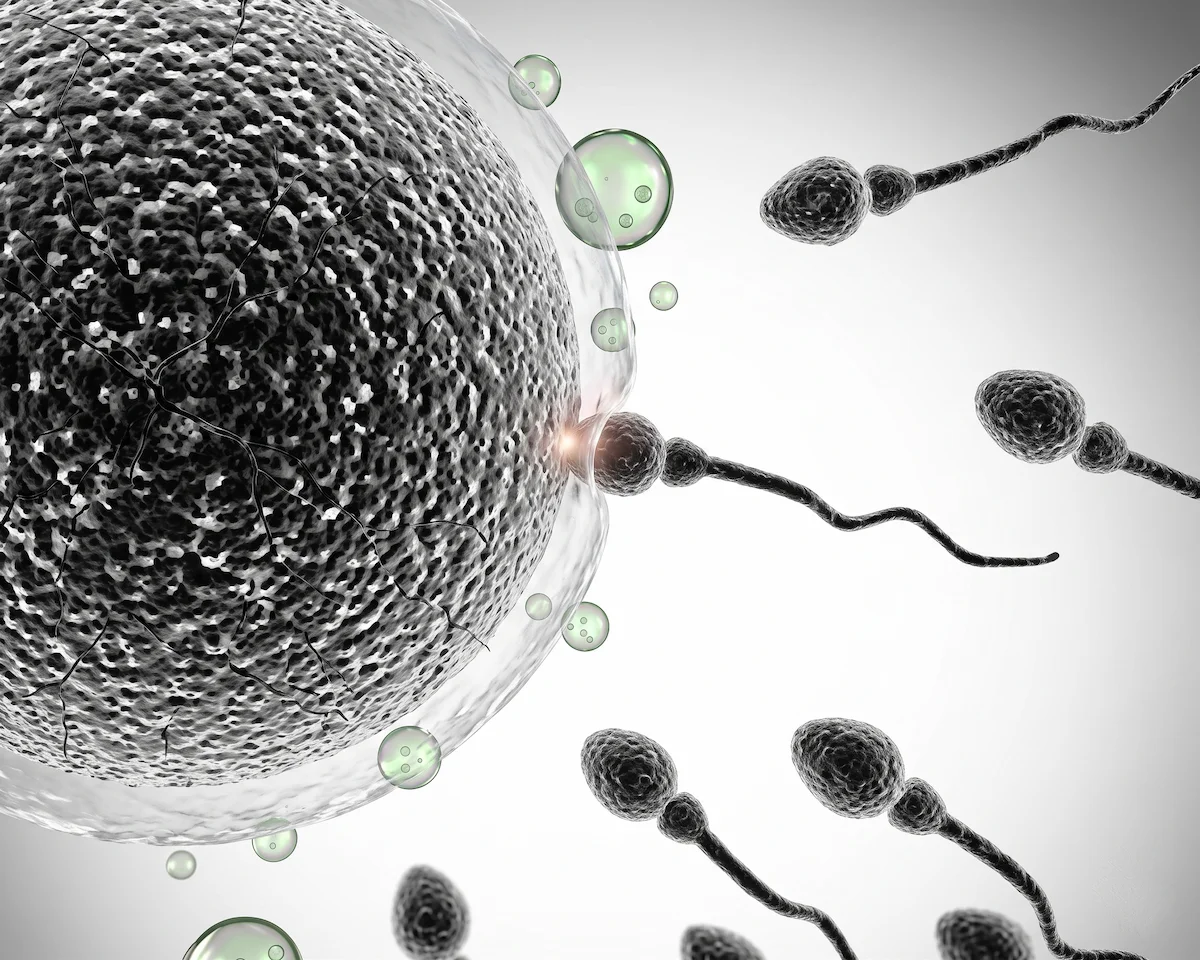
Human development begins at fertilisation, when a sperm cell merges with an ovum to form a single cell called a zygote. Within hours, this cell begins dividing — first into two, then four, then eight — progressing through a solid ball of cells known as the morula before becoming a hollow structure called the blastocyst. Roughly six days after fertilisation, the blastocyst attaches itself to the inner wall of the uterus, embedding firmly into the uterine lining in a process called implantation. This entire sequence, from single cell to implanted structure, is invisible to the naked eye and was only documented after the development of modern microscopy.
Once implanted, the embryo enters a phase of rapid cell specialisation. Around the third week, a groove called the primitive streak appears along the surface, establishing the body's left-right axis and generating three distinct germ layers from which every tissue and organ will eventually arise. By the fourth week, the neural tube — the precursor to the brain and spinal cord — closes along the embryo's length, and the heart begins its first contractions around day 22.
It is between the fourth and fifth weeks that the embryo acquires a distinctive segmented appearance. Paired blocks of tissue called somites form along each side of the developing spinal cord, giving the embryo a ridged, irregular surface that resembles a chewed substance when viewed under magnification. These somites are the precursors of the vertebrae, ribs, and the skeletal muscles of the trunk and limbs. New somites appear in a regular sequence, roughly one pair every ninety minutes, until around forty-two to forty-four pairs have formed by the end of the fifth week.
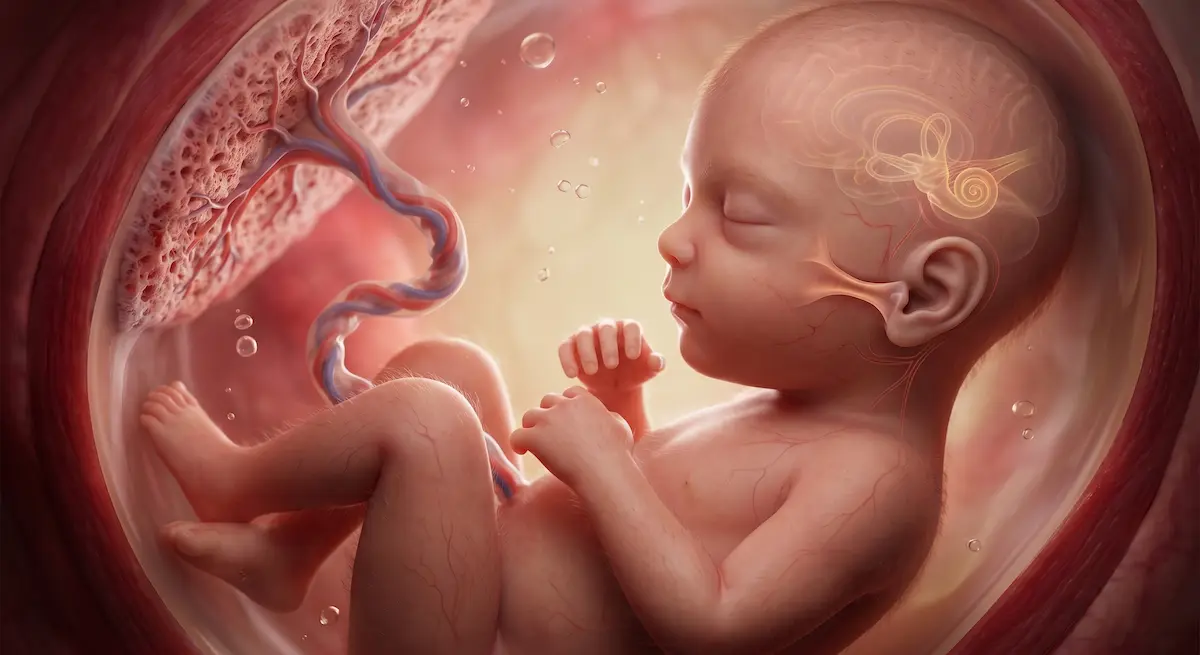
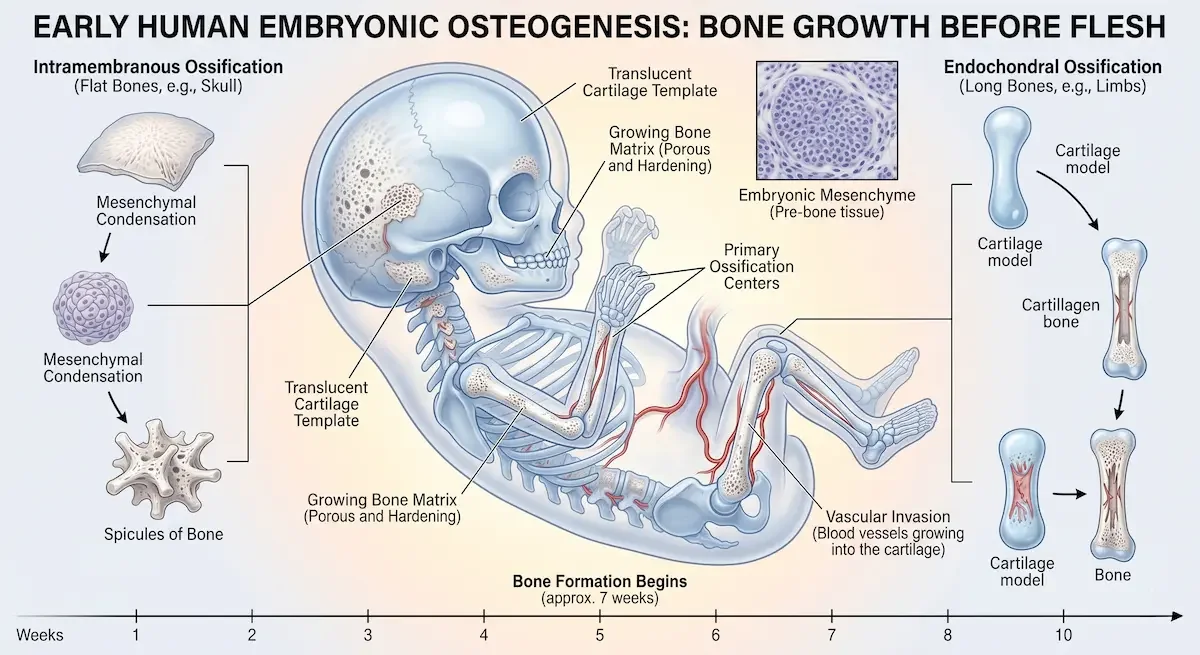
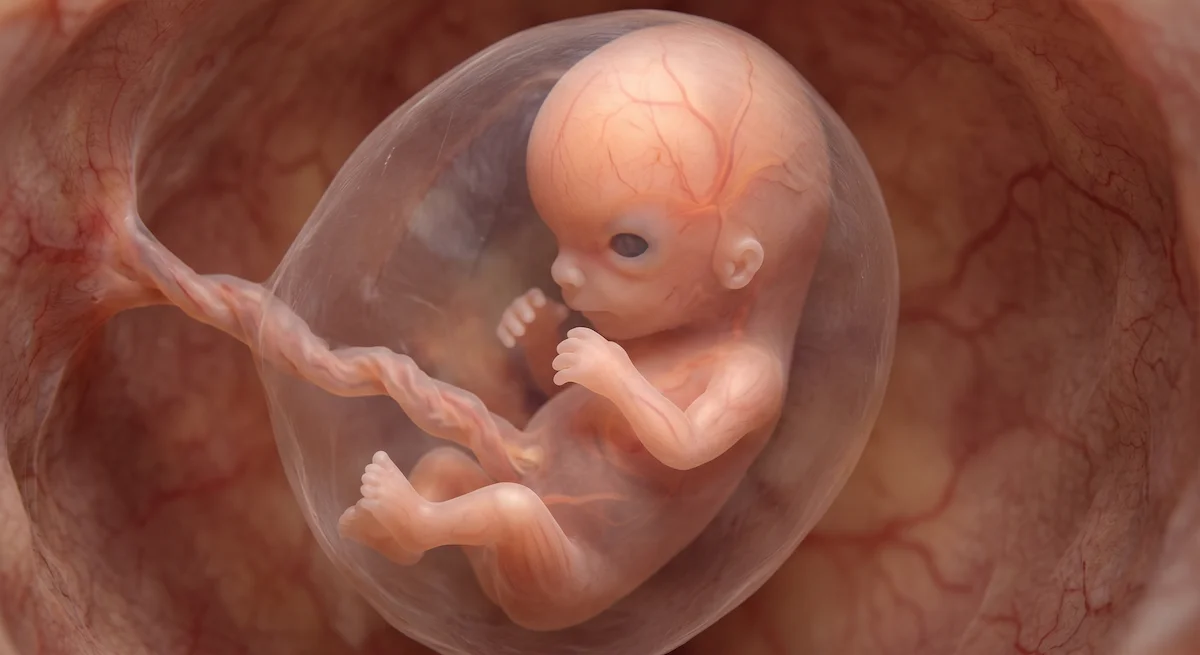
From the sixth week onward, the cartilaginous framework of the skeleton begins to harden through ossification, replacing the earlier flexible template with bone. Muscles develop around this skeletal framework, attaching to the growing bones and enabling the first spontaneous movements. By the eighth week, all major organ systems are present in rudimentary form, and from the ninth week the developing human is classified as a fetus, a stage devoted primarily to growth and refinement rather than the formation of new structures.
Islamic Context
وَلَقَدْ خَلَقْنَا الْإِنسَانَ مِن سُلَالَةٍ مِّن طِينٍ ثُمَّ جَعَلْنَاهُ نُطْفَةً فِي قَرَارٍ مَّكِينٍ ثُمَّ خَلَقْنَا النُّطْفَةَ عَلَقَةً فَخَلَقْنَا الْعَلَقَةَ مُضْغَةً فَخَلَقْنَا الْمُضْغَةَ عِظَامًا فَكَسَوْنَا الْعِظَامَ لَحْمًا ثُمَّ أَنشَأْنَاهُ خَلْقًا آخَرَ فَتَبَارَكَ اللَّهُ أَحْسَنُ الْخَالِقِينَ
And certainly did We create man from an extract of clay. Then We placed him as a drop of sperm in a firm lodging. Then We made the sperm drop into a clinging clot, and We made the clot into a lump, and We made the lump into bones, and We covered the bones with flesh; then We developed him into another creation. So blessed is Allah, the best of creators.
— Quran 23:12-14
The passage traces the human journey to life in a sequence of vivid, unmistakable images. It begins with an extract of clay, the elemental material from which humanity is made, then shifts to the intimate world of the womb. The first term used is nuṭfa, a small drop of fluid, placed in what the Qur'an calls a qarār makīn, a firm, secure lodging. The word qarār comes from the root meaning to settle or to rest, and the description carries the sense of a place that holds and protects.
Then the nuṭfa becomes ʿalaqa, a word meaning to cling. It describes something that attaches itself to a surface and hangs from it, like a leech or a suspended object. Al-Qurṭubī (d. 1273) observed that this term was chosen specifically for its quality of clinging, and the image it conjures is precise: the early substance in the womb grips and holds on.
Next it is described as a muḍgha, a morsel that has been worked between the teeth, something no longer smooth but textured, marked, shaped. Al-Rāzī (d. 1210) noted that the word implies transformation from an undifferentiated mass into something bearing visible structure, as though the Qur'an is describing something being worked into form.
The passage then names ʿiẓām (bones) emerging from the muḍgha, and laḥm (flesh) clothing those bones. The verb used is kasawnā, "We clothed," and it carries the image of a garment being wrapped around a frame that already exists. Bones are mentioned first; flesh comes after, wrapping around them. The final phrase, "then We developed him into another creation" signals a shift. Ibn ʿAbbās (d. 687) understood this as marking a new phase of existence entirely, distinct from every stage that preceded it.
Prev Post
Next Post
Reference Timeline
600 CE
1000 CE
1500 CE
2000 CE
Quran verses 23:12-14
615 CE–622 CE
Surat Al-Mu'minun, gives a detailed, progressive description of the embryonic stages, beginning with "Then We made the sperm drop into a clinging clot..."
687 CE
Ibn Abbas understood 'another creation' as marking a new phase of existence entirely, distinct from every preceding developmental stage.
Ibn ʿAbbās (d. 687), Transmitted Narrations
767 CE
Defined mudgha as formless flesh and established a strict chronology where bones must precipitate first to serve as a physical scaffold before being clothed.
Tafsīr Muqātil ibn Sulaymān (d. 767)
1210 CE
Noted the term mudgha implies a transition from an undifferentiated liquid mass into a material bearing visible texture, physically worked into form.
Fakhr al-Din al-Rāzī (d. 1210), Mafātīḥ al-Ghayb
1273 CE
Observed that the term ʿalaqa was chosen specifically for its quality of clinging, signifying the early substance grips and holds onto the womb.
Al-Qurṭubī (d. 1273), Al-Jāmiʿ li-Aḥkām al-Qurʾān
1350 CE
Rejected the dominant simultaneous development model, relying on sequential grammar to prove the skeletal framework must exist before being covered by flesh.
Ibn al-Qayyim (d. 1350), Al-Tibyān fī Aqsām al-Qurʾān
1875 CE
Oscar Hertwig observes the fertilization process under a microscope, physically documenting the merging of a sperm and ovum to form a single-cell zygote
Oscar Hertwig (1875)
1914 CE
The Carnegie Collection of Embryology is established, systematically documenting the developmental sequence, including the segmented somites and the ossification of the skeletal framework
Carnegie Stages of Human Embryology (Established 1914)
1944 CE
Modern microscopy enables the first successful documentation of human implantation, revealing the previously invisible sequence from a single cell to an embedded blastocyst
Arthur Hertig and John Rock (1944)
The Connection
The Qur'anic sequence, from a fluid drop to a clinging mass to a chewed-like lump to bones clothed with flesh, describes the same stages that embryology documents through its own methods. The attachment implied by ʿalaqa, the segmented impression captured by muḍgha, and the priority given to skeletal formation before muscular wrapping each find a counterpart in what is now known of early human development. The verse's closing phrase, "then We developed him into another creation," marks a transition that remains meaningful whether read as theology or as biology.
Related Connections