
Bioscience
The Ways Made Easy
Scientific Context
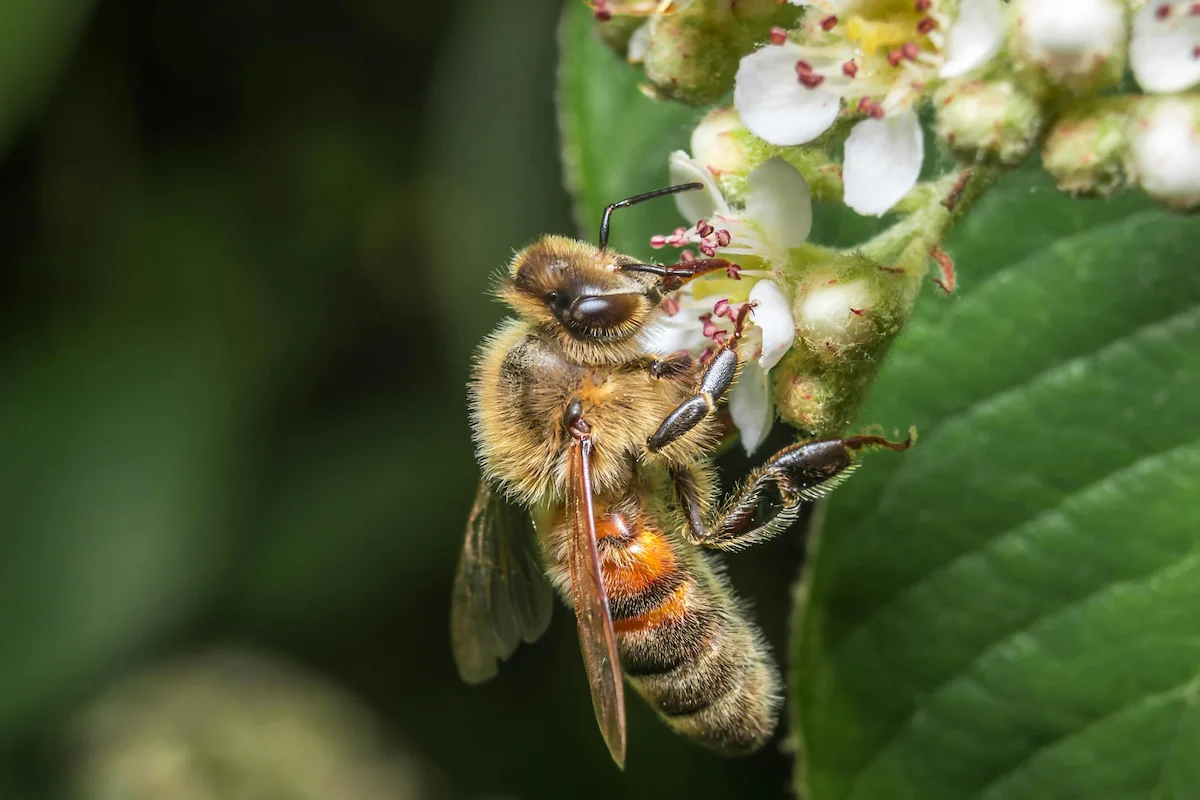
The Honeybee's Navigation
To navigate the world, a honeybee must solve an incredibly complex spatial problem. Foraging workers travel miles from their hive, battling shifting winds and changing terrain. The methods they use to communicate their findings have fascinated observers for millennia. Aristotle noted in his History of Animals that returning bees performed a shaking dance in front of the group, suspecting it was an intentional form of communication. Much later, in 1788, naturalist Ernst Spitzner observed this behavior and accurately interpreted it as a method for transmitting the odors of distant foraging resources to other nestmates.
In 1946, ethologist Karl von Frisch published Die Tänze der Bienen (The Dances of the Bees), officially decoding the mathematical mechanism behind this communication now known as the waggle dance. Once a foraging bee finds a resource, she returns to the pitch-black hive to share her findings. Because the hive is dark, observing bees cannot see the dancer; instead, they feel her rhythmic movements and register the chemical cues she brought back. Through this interaction, the bee transmits a remarkably dense packet of data. Her movements communicate the exact direction of the target relative to the sun and the precise distance required to reach it. Simultaneously, the vigor of her dance indicates the quality and abundance of the resource, while the physical scent clinging to her body tells the observing bees exactly what kind of flower to look for.
The foraging bee effectively converts raw geographic coordinates into a highly specific mathematical flight plan. The angle of her dance relative to gravity translates into the exact flight path, while the duration of her waggle encodes the distance. This spatial metric is acquired during her initial flight via optic flow. As biologist Mandyam V. Srinivasan demonstrated in his 1996 paper Honeybee Navigation En Route to the Goal, bees calculate this exact geographic distance by measuring the speed at which visual features pass across their compound eyes. The dancer even adjusts her angle in real time to account for the sun moving across the sky while she is inside the hive. Equipped with this specific information, the departing bees do not wander or search the landscape. They fly a direct, pre-calculated line to the resource. Through this shared spatial data, the colony transforms the open air into a precise network of invisible, highly structured routes.
Islamic Context
وَأَوْحَىٰ رَبُّكَ إِلَى النَّحْلِ أَنِ اتَّخِذِي مِنَ الْجِبَالِ بُيُوتًا وَمِنَ الشَّجَرِ وَمِمَّا يَعْرِشُونَ ٦٨ ثُمَّ كُلِي مِن كُلِّ الثَّمَرَاتِ فَاسْلُكِي سُبُلَ رَبِّكِ ذُلُلًا يَخْرُجُ مِن بُطُونِهَا شَرَابٌ مُّخْتَلِفٌ أَلْوَانُهُ فِيهِ شِفَاءٌ لِّلنَّاسِ إِنَّ فِي ذَٰلِكَ لَآيَةً لِّقَوْمٍ يَتَفَكَّرُونَ ٦٩
And your Lord inspired to the bee, "Take for yourself among the mountains, houses, and among the trees and in that which they construct. Then eat from all the fruits and follow the ways of your Lord made easy. There emerges from their bellies a drink, varying in color, in which there is healing for the people. Indeed, in that is a sign for a people who give thought.
— Quran 16:68-69
The Quran's description of the bee begins with an unexpected choice of language; it says that God gave the bee waḥy (inspiration). Because it is a word overwhelmingly used in the Quran for revelation to the prophets, its application to an insect immediately stood out to the earliest Muslim interpreters. Ibn ʿAbbās (d. 687) explained that, in this context, waḥy refers to an innate form of guidance placed within the bee itself: an instruction embedded in its nature that directs its behavior with precision. The bee's actions are therefore presented not as learned responses but as the execution of a guidance already implanted within it.
The verse proceeds to describe what that guidance entails. The bee is directed to establish its dwellings, to feed from the fruits of the earth, and then to "follow the ways of your Lord made easy" (subula rabbiki dhululan). The key word, dhululan, conveys the sense of something rendered smooth, compliant, or readily traversed. Early commentators understood this as more than expressive language. Qatādah ibn Diʿāmah (d. 735) interpreted it as referring to routes prepared for the bee in the air. Al-Ṭabarī (d. 923) preserved this explanation, describing the insect as following established pathways across the sky, emphasizing movement along a set course rather than a search for direction.
Centuries later, Al-Rāzī (d. 1210) reflected on how this verse corresponded with the bee's observable behavior. He drew attention to two features in particular: the precise hexagonal construction of the honeycomb and the bee's ability to travel considerable distances before returning accurately to its hive. To him, these behaviors displayed a degree of order and coordination that the insect itself could not account for. He regarded them as the manifestation of the guidance placed within the bee.
Al-Qurṭubī (d. 1273) and Ibn Kathīr (d. 1373) understood the verse to portray the bee's environment as one already prepared for its movement. In their reading, the sky is not simply empty space but a medium through which the bee travels along routes made accessible to it. Its flight is therefore described not as random exploration but as the following of pathways that have been laid out in advance.
Prev Post
Next Post
Reference Timeline
1 CE
600 CE
1000 CE
1500 CE
2000 CE
Quran verses 16:68-69
615 CE–622 CE
And your Lord inspired the bee... 'follow the ways of your Lord made easy'
350 BCE
Aristotle notes in his 'History of Animals' that returning bees perform a shaking dance in front of the group, suspecting it is an intentional form of communication
Aristotle (c. 350 BCE)
687 CE
Ibn ʿAbbās explains that the Quranic use of 'waḥy' for the bee refers to an innate form of guidance embedded in its nature, presenting its actions as the execution of implanted instructions rather than learned responses
Ibn ʿAbbās (d. 687)
735 CE
Qatādah interprets the word 'dhululan' as referring to actual, literal routes prepared for the bee in the air, transforming open space into accessible, compliant pathways
Qatādah ibn Diʿāmah (d. 735)
923 CE
Al-Ṭabarī preserves early explanations describing the insect as strictly following established pathways across the sky, emphasizing movement along a pre-set course rather than random exploration
Al-Ṭabarī (d. 923)
1210 CE
Al-Rāzī reflects on the bee's ability to travel considerable distances and return accurately, concluding this spatial coordination manifests divine guidance rather than independent invention
Fakhr al-Din al-Rāzī (d. 1210)
1273 CE
Al-Qurṭubī and Ibn Kathīr assert the sky is a medium where the bee travels along pre-laid routes, viewing its flight as following established pathways made accessible to it rather than searching
Al-Qurṭubī (d. 1273) & Ibn Kathīr (d. 1373)
1788 CE
Naturalist Ernst Spitzner observes the shaking behavior of returning bees and accurately interprets it as a method for transmitting the odors of distant foraging resources to other nestmates
Ernst Spitzner (1788)
1946 CE
Ethologist Karl von Frisch publishes 'Die Tänze der Bienen', decoding the waggle dance as a mathematical mechanism that transmits precise flight angles and distances to the observing hive
Karl von Frisch (1946)
1996 CE
Biologist Mandyam V. Srinivasan demonstrates that bees calculate exact geographic distance during flight via optic flow, measuring the speed at which visual features pass across their compound eyes
Mandyam V. Srinivasan (1996)
The Connection
The Quran describes the bee as being inspired to fly through the world along precise, subjugated paths that have been laid out and made easy to traverse. The ethological record demonstrates that bees use advanced spatial communication to convert empty air into pre-calculated, mathematical vectors, creating highly structured flight routes for the rest of the colony to follow directly to a target. In both contexts, it is clear that far from wandering blindly through an open sky, the insect operates on a network of established pathways.
Related Connections