Bioscience
A Syrup for Healing - Part 3
Scientific Context
Systemic Effects of Honey
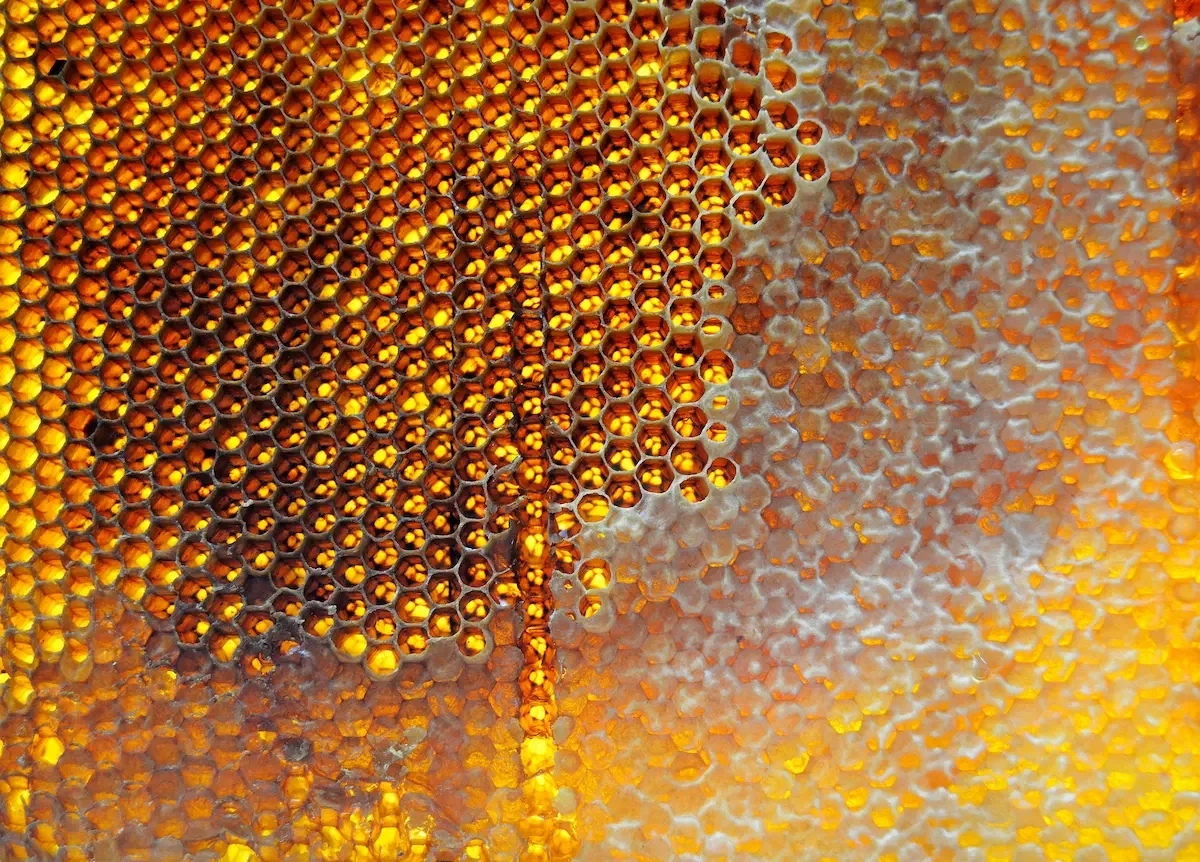
Honey is often seen as a simple, sweet comfort food, but pure honey is not just ordinary sugar. It is a dense, chemically diverse fluid packed with potent plant polyphenols, rare carbohydrates, and insect enzymes. When swallowed as a medicinal draught, honey does not merely target a single symptom. It acts systemically, delivering active biochemical relief across the airway, stomach, gut, and bloodstream.
While honey has been a home cough/sore throat remedy for ages, we now know that there is real science backing the tradition. In 2007, clinical trials led by pediatrician Ian Paul showed that swallowed honey shuts down this circuit more effectively than standard pharmaceuticals like dextromethorphan. The thick syrup provides an immediate physical shield, mechanically coating the pharyngeal mucosa to muffle hyper-reactive receptors while natural antioxidants quiet local inflammation. These results prompted both the World Health Organization and the American Academy of Pediatrics to recommend the fluid as a frontline pediatric therapy.
Descending into the stomach, honey operates as a powerful mucosal protector. In 1985, a landmark clinical trial published in the British Medical Journal demonstrated that adding pure honey to oral rehydration therapy significantly shortened the duration of acute bacterial diarrhea in pediatric patients. During the 1990s, gastroenterologists found that bioactive honey also actively suppresses Helicobacter pylori, the primary bacterial pathogen driving chronic gastritis, while insulating the delicate gastric wall against corrosive acid. Further along the digestive tract, it serves as a targeted prebiotic engine. By carrying rare, non-digestible oligosaccharides deep into the colon, honey selectively nourishes beneficial colonies of Bifidobacterium and Lactobacillus, fostering a resilient microbiome that crowds out opportunistic invaders.
Once absorbed into the bloodstream, honey overturns foundational assumptions about dietary sugar. A 2022 systematic review from the University of Toronto demonstrated that replacing free dietary sugars with raw honey consistently lowers fasting blood glucose and trims circulating triglycerides. Because it packages sugars alongside plant polyphenols, bioactives that actively inhibit carbohydrate-digesting enzymes, it smoothly blunts glucose surges.
Continuing research into the healing properties of honey suggests that there is much left to discover. Newly examined data from recent 2024 oncology trials show that honey significantly alleviates severe radiation-induced oral mucositis, while initial results from emerging neuro-pharmacological studies indicate an ability to actively suppress neuro-inflammation.
Islamic Context
... يَخْرُجُ مِن بُطُونِهَا شَرَابٌ مُّخْتَلِفٌ أَلْوَانُهُ فِيهِ شِفَاءٌ لِّلنَّاسِ إِنَّ فِي ذَٰلِكَ لَآيَةً لِّقَوْمٍ يَتَفَكَّرُونَ ٦٩
...There emerges from their insides a syrup, varying in color, in which there is healing for humankind. Indeed, in that is a sign for a people who give thought.
— Quran 16:69
When the Qur’an introduces the therapeutic value of honey in this verse, it specifies that what emerges from the bee is a sharāb, a drink or syrup, in which there is shifāʾun lin-nās, "healing for humankind" (16:69). Early authorities like Mujāhid (d. 722) asserted that the indefinite noun shifāʾ (healing) signifies broad restorative benefit rather than an absolute cure-all. Scholars also highlighted the phrasing lin-nās (for humankind). Fakhr al-Dīn al-Rāzī (d. 1210) observed that while the Quran describes itself as "healing and mercy for the believers" (17:82), honey is framed as an empirical biological remedy for all humankind, operating across human physiology regardless of faith. This material autonomy was underscored by Ibn Masʿūd (d. 653), who advised taking advantage of "the two healings: honey and the Qur’an," formally distinguishing physical pharmacology from spiritual care.
In a saheeh Hadeeth recorded by both al-Bukhārī (d. 870) and Muslim (d. 875), a man approached the Prophet seeking a remedy for his brother, whose abdomen was in severe distress. The Prophet instructed: "Give him honey to drink." When the man returned repeatedly claiming that the syrup only worsened the diarrhea, the Prophet reaffirmed the treatment, remarking: "Allah has spoken the truth, and your brother's abdomen has lied. Give him honey to drink." Upon receiving another draught, the brother’s symptoms subsided and he recovered.
Classical scholars analyzed this exchange not as an unexplainable miracle, but as an empirical lesson in internal medicine and proper dosing. In the tenth century, the traditionist Abū Sulaymān al-Khaṭṭābī (d. 998) observed that the abdomen "lied" because it harbored stubborn impurities resisting immediate relief. In Zād al-Maʿād, Ibn al-Qayyim (d. 1350) explained that gastric distress frequently arises when viscous humors cling to the stomach lining and intestines. Taken as an oral draught, honey functions as an internal detergent, cutting through sticky residue and expelling congested waste. The initial surge in symptoms was not a failure of the remedy, but the physical process of evacuation before the bowel could heal. Repeated doses were required to dislodge the irritant. By viewing honey as a systemic remedy traveling through the digestive tract, classical authorities recognized that healing occurs from the inside out, relying on active internal mechanisms to restore bodily health.
This clinical approach quickly moved from individual case accounts into the institutional foundations of Islamic internal medicine. Physicians transformed honey into the primary base for medicine, relying on its natural stability to preserve and deliver delicate botanical extracts. Prominent medical authorities like Ibn Sīnā (d. 1037) and al-Rāzī (d. 925) routinely formulated these medications for deep-seated gastric, hepatic, and respiratory ailments, recognizing that honey's rapid systemic absorption carried active compounds efficiently through the body.
Prev Post
Next Post
Reference Timeline
600 CE
1000 CE
1500 CE
2000 CE
Quran verse 16:69
615 CE–622 CE
Identifies honey as a syrup or drink (sharāb) providing broad therapeutic healing (shifāʾ) for humankind
653 CE
Ibn Masʿūd (d. 653) formally distinguishes physical pharmacology from spiritual care, advising the use of 'the two healings: honey and the Qur’an'
Narrations in Sunan Ibn Mājah & al-Mustadrak al-Ḥākim
722 CE
Early authority Mujāhid (d. 722) asserts that the indefinite noun shifāʾ (healing) denotes broad therapeutic restoration rather than an absolute, single cure-all
Early tafsīr traditions via al-Ṭabarī (d. 923)
925 CE
Physician Abū Bakr al-Rāzī (Rhazes, d. 925) formulates honey-based draughts and electuaries in hospital dispensaries, utilizing its rapid systemic absorption to treat gastric and chest ailments
Kitāb al-Ḥāwī fī al-Ṭibb
998 CE
Traditionist Abū Sulaymān al-Khaṭṭābī (d. 998) explains that the brother's abdomen 'lied' due to stubborn visceral impurities requiring repeated dosing to evacuate and resolve
Maʿālim al-Sunan
1037 CE
Ibn Sīnā (d. 1037) codifies honey-based syrups (ashribah) and oxymels in medical formularies, establishing honey's ability to transport active botanicals rapidly through the body
Al-Qānūn fī al-Ṭibb
1210 CE
Fakhr al-Dīn al-Rāzī (d. 1210) observes that scripture frames honey as healing for humankind (li-n-nās), establishing it as an objective biological law operating regardless of faith
Mafātīḥ al-Ghayb
1350 CE
In Zād al-Maʿād, Ibn al-Qayyim (d. 1350) analyzes the gut hadith, explaining that honey acts as an internal detergent that cuts through viscous humors and expels congested waste before healing occurs
Zād al-Maʿād fī Hady Khayr al-ʿIbād
1985 CE
A landmark clinical trial in the British Medical Journal demonstrates that adding pure honey to oral rehydration therapy significantly shortens the duration of acute bacterial diarrhea in pediatric patients
British Medical Journal (Haffejee & Moosa)
1994 CE
Gastroenterologists demonstrate that bioactive honey actively inhibits Helicobacter pylori, the primary bacterial pathogen driving chronic gastritis and gastric ulcers
Journal of the Royal Society of Medicine (Al Somal et al.)
2007 CE
Clinical trials show that swallowed honey quiets pediatric nocturnal cough and coats pharyngeal receptors more effectively than dextromethorphan, securing WHO and AAP endorsements
Archives of Pediatrics & Adolescent Medicine (Paul et al.)
2022 CE
A systematic review from the University of Toronto demonstrates that replacing free dietary sugars with raw honey consistently lowers fasting blood glucose and reduces circulating triglycerides
Nutrition Reviews (Khan et al.)
2024 CE
Oncology trials and meta-analyses demonstrate that honey significantly alleviates severe radiation-induced oral mucositis, while neuropharmacological studies show targeted suppression of neuroinflammation
In Vivo & Supportive Care in Cancer
The Connection
The Qur’anic description of honey as shifāʾun lin-nās (healing for humankind) identifies it as a biological remedy defined by wide-range restorative action, and Prophetic medicine advocated repeated doses of honey to actively clear intestinal distress. Modern gastroenterology and metabolic science attest to diverse medicinal benefits: swallowed honey coats irritated airway receptors and soothes inflammation better than traditional medication, clears acute bacterial diarrhea, and buffers glucose surges in the bloodstream, and ongoing studies show honey to have even more potential curative properties.
Related Connections