Neuroscience
A Lying, Sinning Forelock
Scientific Context
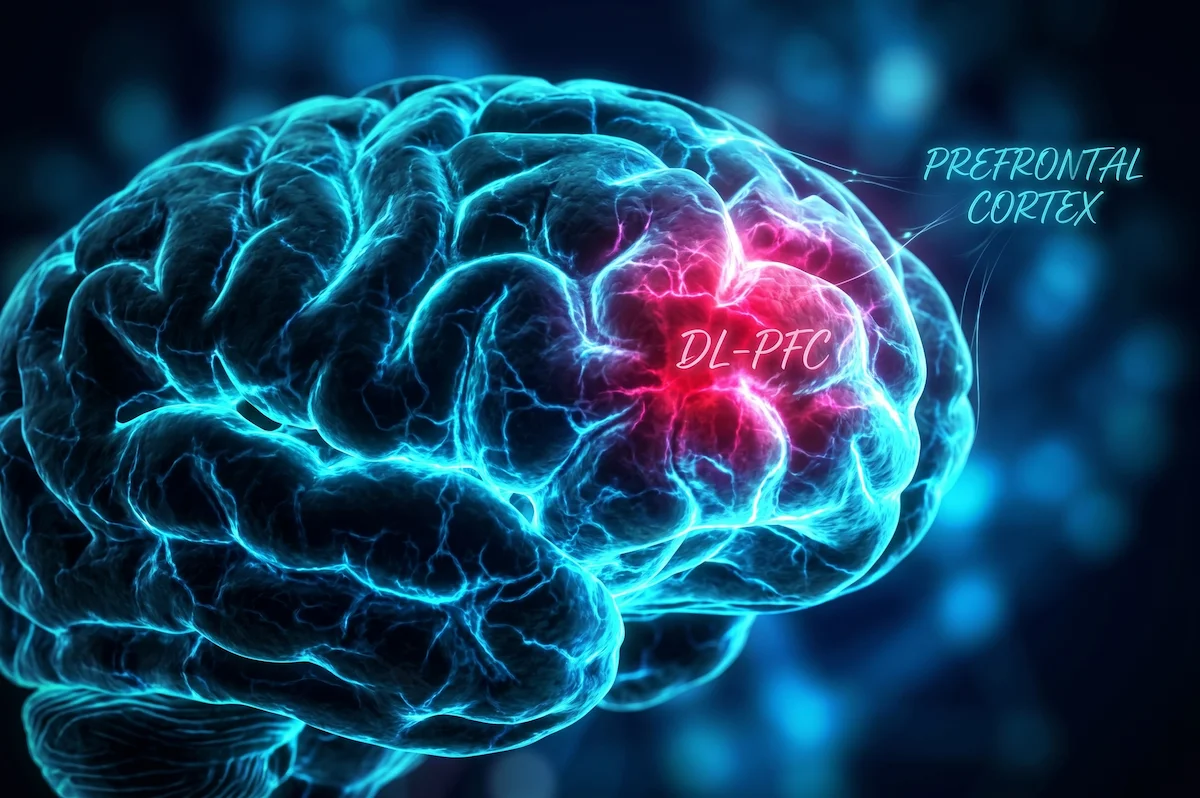
Executive Function and the Frontal Lobe
The prefrontal cortex lies directly behind the forehead. It acts as the brain’s command center for executive function, long-term planning, impulse control, moral judgment, and behavioral regulation. Unlike other brain regions, this area continues its development into early adulthood. Whenever a person resists an immediate urge or carefully calculates a future goal, this front region of the head is actively working.
Our understanding of this anatomical site began in 1848 with Phineas Gage who survived a catastrophic accident that destroyed much of his left frontal lobe. Dr. John Martyn Harlow documented a striking change in Gage's personality. Once responsible and polite, he became impulsive, profane, and incapable of executing plans. Harlow’s report provided the first documented evidence that the front of the head governs personal judgment, self-restraint, and social behavior.
In 1876 Sir David Ferrier proved that surgical damage to the prefrontal cortex produced no paralysis or sensory loss, but destroyed an animal's attentional control and behavioral restraint. By 1935, Egas Moniz developed the prefrontal lobotomy that surgically severed connections to the frontal lobes to treat psychiatric illness. Widely performed through the mid-twentieth century, the lobotomy era demonstrated across thousands of clinical patients that damaging the prefrontal region flattens character, impairs long-term planning, and disables moral awareness.
In 1994, neuroscientist Antonio Damasio, showed that the prefrontal cortex connects logical thinking with emotional body signals. Patients with prefrontal damage could still solve abstract logic problems on paper, yet their real-life choices became reckless because they lost access to the internal signals that guide moral decision-making.
Studies published in 2001 and 2002 proved that lying is an active executive task rather than a passive act. To formulate a lie, the brain must suppress the automatic truth response and construct a false narrative. High-resolution brain scans showed that this dual operation consistently creates concentrated metabolic activity within the prefrontal cortex, establishing that the physical engine required to execute a lie sits directly behind the forehead.
Islamic Context
كَلَّا لَئِن لَّمْ يَنتَهِ لَنَسْفَعًا بِالنَّاصِيَةِ نَاصِيَةٍ كَاذِبَةٍ خَاطِئَةٍ
Nay! If he does not desist, We will surely drag him by the forelock — a lying, sinning forelock.
— Quran 96:15-16
This passage singles out a specific physical location for warning and seizure: the nāṣiya (the forelock or front of the head). The Prophet’s companion ʿAbdullāh ibn ʿAbbās (d. 687) defined the nāṣiya as the extreme front portion of the head directly above the forehead. He explained that the verb lanasfaʿan (to grab or drag forcibly) refers to an established physical gesture among the Arabs for total subjection; taking control of an individual at the point that leads their posture and movement. Al-Ṭabarī (d. 923) preserved this understanding, noting that grabbing the forelock physically overpowered the person at their leading edge.
Crucially, the Quran does not assign general intellect or reflection to this frontal area. Across the text, deep comprehension and contemplation are consistently attributed to the heart, such as in Surah Al-Hajj (22:46), which speaks of "hearts with which to reason" (qulūbun yaʿqilūna bihā). In Surah Al-ʿAlaq, however, the text isolates the front of the head for a far more specific role: moral choice and active behavioral direction. Ibn ʿAbbās noted that the adjectives kādhibah (lying) and khāṭiʾah (sinning) attach false declarations and deliberate wrongdoing directly to the front of the head itself, rather than describing the person as a whole.
Later scholars built upon this early foundation to explore why moral traits were attached to this physical spot. Al-Baghawī (d. 1122) noted that the forelock is described as lying and sinning because a person's conscious choices are initiated through that exact location. In Mafātīḥ al-Ghayb, Fakhr al-Dīn al-Rāzī (d. 1210) explained this using the grammatical rule of isnād majāzī—attributing an action directly to its physical locus of governance, presenting the front of the head as the primary driver (al-mutawallī) of the deed.
Al-Bayḍāwī (d. 1286) explained that attaching an action directly to a specific body part highlights that part as the physical locus executing the act. Al-Biqāʿī (d. 1480) expanded on this physical logic, observing that the forelock serves as the leading edge of human posture; whenever a person forms an intent to move, the front of the head inclines first. From Ibn ʿAbbās to later commentators, Quranic scholars consistently identified the front of the head as the primary site where intent takes shape, deceit is carried out, and moral choices manifest.
Prev Post
Next Post
Reference Timeline
600 CE
1000 CE
1500 CE
2000 CE
Quran verses 96:15-16
610 CE–632 CE
Warns of seizing the 'nāṣiya' (forelock/front of the head), describing it specifically as 'kādhibah' (lying) and 'khāṭiʾah' (sinning)
687 CE
Ibn ʿAbbās noted that the adjectives kādhibah (lying) and khāṭiʾah (sinning) attach false declarations and deliberate wrongdoing to the front of the head rather than the whole person.
Ibn ʿAbbās (d. 687)
923 CE
Al-Ṭabarī notes that seizing someone by the forelock was an established gesture of total subjection, taking control at the exact physical point guiding posture and movement
Muḥammad ibn Jarīr al-Ṭabarī, Jāmiʿ al-Bayān (c. 923)
1122 CE
Al-Baghawī notes that the forelock is described as lying and sinning because a person's conscious choices and actions are initiated through that exact location
Al-Ḥusayn ibn Masʿūd al-Baghawī, Maʿālim al-Tanzīl (c. 1122)
1210 CE
Fakhr al-Dīn al-Rāzī explains the attribution of moral qualities to the forelock using the grammatical rule of 'isnād majāzī', presenting the front of the head as the primary driver of the deed
Fakhr al-Dīn al-Rāzī, Mafātīḥ al-Ghayb (c. 1210)
1286 CE
Al-Bayḍāwī analyzes the rhetoric, explaining that attaching an action directly to a specific body part highlights it as the physical locus executing the act
ʿAbd Allāh ibn ʿUmar al-Bayḍāwī, Anwār al-Tanzīl wa-Asrār al-Taʾwīl (c. 1286)
1848 CE
Dr. John Martyn Harlow documents Phineas Gage's post-accident personality shift following frontal lobe destruction, providing early clinical evidence linking the front of the head to self-restraint
John Martyn Harlow, Publications of the Massachusetts Medical Society (1848)
1876 CE
Sir David Ferrier proves through experimental ablation that surgical damage to the prefrontal cortex impairs attentional control and behavioral restraint without causing sensory loss
David Ferrier, The Functions of the Brain (1876)
1935 CE
Egas Moniz develops the prefrontal lobotomy, demonstrating through clinical psychiatric application that severing frontal lobe connections flattens character and impairs planning
Egas Moniz, Prefrontal Leucotomy (1936)
1994 CE
Antonio Damasio demonstrates through neurological studies that prefrontal cortex damage disconnects rational thinking from emotional signals, destroying moral decision-making
Antonio Damasio, Descartes' Error: Emotion, Reason, and the Human Brain (1994)
2001 CE
Brain imaging studies prove that deception requires active executive operation, creating concentrated metabolic activity within the prefrontal cortex behind the forehead
Sean A. Spence et al., Nature Neuroscience (2001)
2002 CE
Functional neuroimaging studies further confirm that deceptive responses require heightened cognitive control, consistently isolating the physical mechanics of lying to the prefrontal cortex
Tatiana I. Kozel et al., Biological Psychiatry (2002)
The Connection
The Quran describes the front of the head (nāṣiya) as "lying" and "sinning," using classical Arabic grammar to identify this physical locus as the origin of intent and deliberate wrongdoing. Modern neuroscience—from Phineas Gage in 1848 and mid-century lobotomy clinical data to fMRI deception studies in the early 2000s—shows that the prefrontal cortex directly behind the forehead governs impulse control, moral regulation, and the cognitive tasks needed to execute a lie.
Related Connections