Neuroscience
Hearts to Reason
Scientific Context
The Intrinsic Cardiac Nervous System
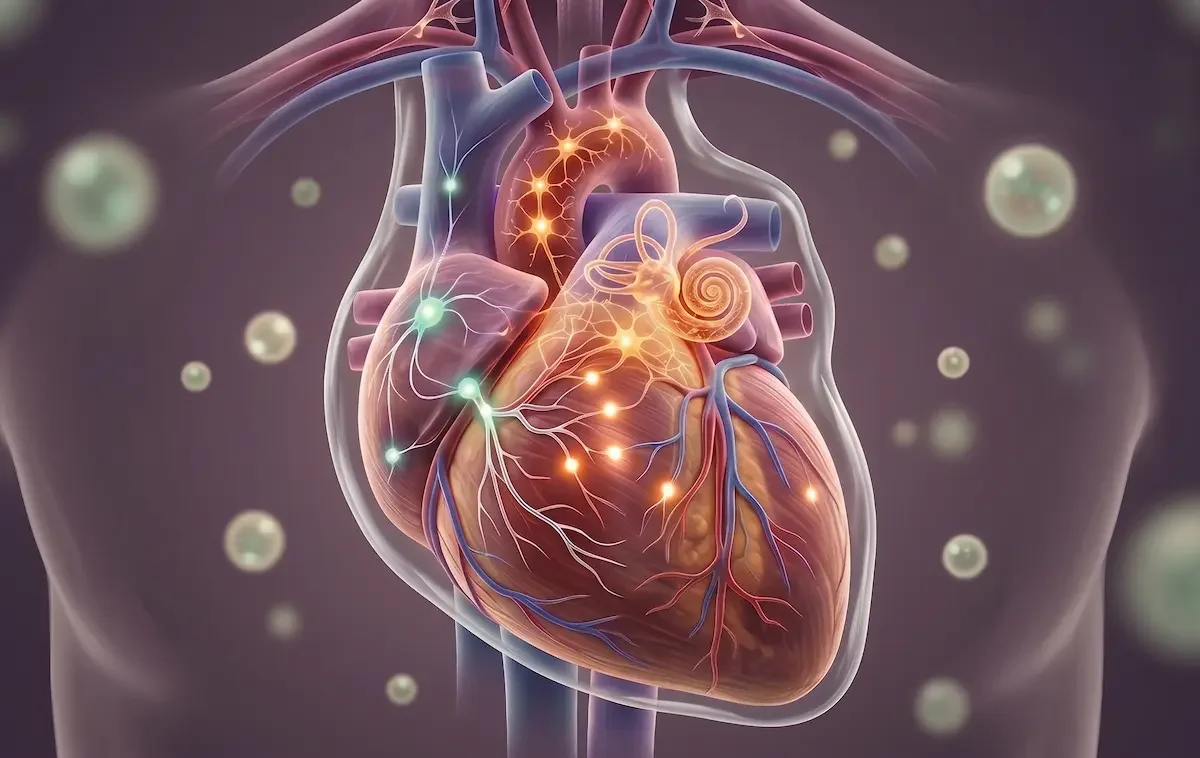
In 1628, English physician William Harvey mapped the human circulatory system, establishing the classical model of the heart as a mechanical pump—a muscular engine operating under the top-down command of the brain. That view began to fracture in 1991, when neurocardiologist J. Andrew Armour demonstrated that the heart possesses its own complex neural architecture: the intrinsic cardiac nervous system. Embedded within the heart wall are roughly 40,000 sensory neurons, interneurons, and motor cells capable of processing data and regulating cardiac output independently of the central nervous system.
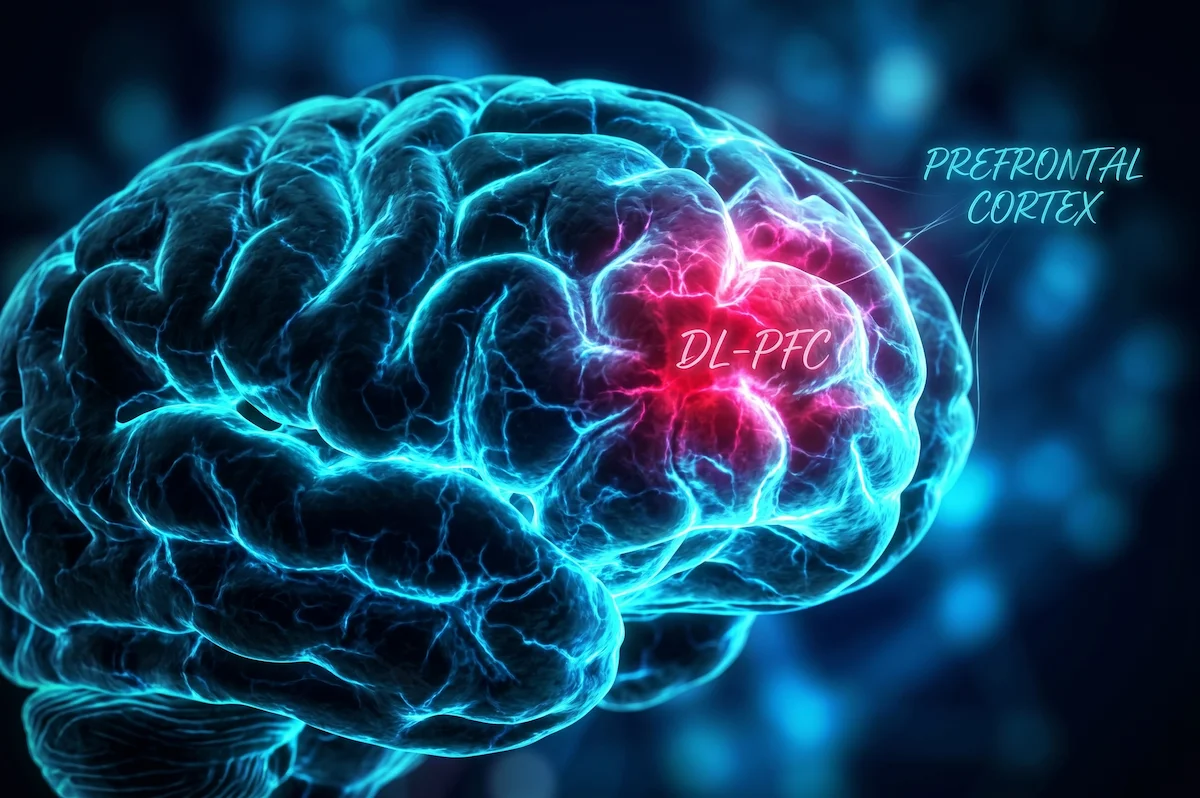
Crucially, research throughout the 1990s revealed that communication between the two organs is heavily weighted upward. Ascending signals outnumber descending brain commands by roughly four to one. Between 80 and 85 percent of the neural fibers in the cardiac branch of the vagus nerve are afferent, carrying continuous streams of mechanical, electrical, and chemical data from the heart into the brainstem. From there, these signals bypass simple reflex centers to project directly into higher neurological hubs: the thalamus, the amygdala, and the prefrontal cortex—the primary center for abstract logic, attention, and executive decision-making.
This constant cardiovascular feedback actively shapes how the brain reasons. Under the neurovisceral integration model, neural networks linking the prefrontal cortex and the heart form a single operational circuit. Beat-to-beat cardiac variability directly dictates the neural resources available to the executive brain, governing working memory, cognitive flexibility, and impulse inhibition. Furthermore, landmark research into the somatic marker hypothesis by neuroscientist Antonio Damasio revealed that human reasoning cannot function on pure logic alone; it requires real-time cardiovascular feedback to evaluate risk. When heart-to-brain sensory communication is impaired, individuals consistently fail at basic cognitive evaluations and make detrimental decisions.
These findings fundamentally reshape cognitive neuroscience. Reasoning and discernment do not occur in cerebral isolation. The physical heart operates as an active sensory organ, continuously supplying the prefrontal cortex with the biological timing, somatic markers, and neural inputs essential to evaluate experience, weigh consequences, and make rational decisions.
Islamic Context
أَفَلَمْ يَسِيرُوا فِي الْأَرْضِ فَتَكُونَ لَهُمْ قُلُوبٌ يَعْقِلُونَ بِهَا أَوْ آذَانٌ يَسْمَعُونَ بِهَا فَإِنَّهَا لَا تَعْمَى الْأَبْصَارُ وَلَٰكِن تَعْمَى الْقُلُوبُ الَّتِي فِي الصُّدُورِ
So have they not travelled through the earth and have hearts by which to reason and ears by which to hear? For indeed, it is not eyes that are blinded, but blinded are the hearts which are within the breasts.
— Quran 22:46
This passage opens with a direct challenge, "have they not traveled through the earth and possessed hearts with which to reason?" In classical Arabic dictionaries such as Lisān al-ʿArab, lexicographers trace the verb yaʿqilu to the root meaning of restraint, specifically the tether used to hobble and secure a camel (aʿiqāl). As the classical linguist Al-Rāghib al-Iṣfahānī noted, the term defines an active faculty, the power to hold back impulsive desires, bind observations together, and grasp the true nature of reality. The phrasing in the text is grammatically deliberate. It does not treat the heart as a symbol for passive emotion; it assigns the rigorous work of reasoning and understanding directly to the heart as a primary task.
From there, the text draws a sharp boundary between outward looking and genuine comprehension. It clarifies that a failure to understand is not a flaw of physical sight. Ibn ʿAbbās noted that this verse served as a direct exoneration of the physical senses, impairment of the eyes is irrelevant to human discernment. The only blindness that leads to ruin is the failure of the heart inside the chest to reason (yaʿqilu) and understand. He identified the heart (al-qalb) as the central authority where reasoning (ʿaql), comprehension (fahm), and moral decision-making take place.
To remove any poetic ambiguity, the text identifies the exact seat of this faculty: "the hearts that are within the breasts." The word used is qalb, the word for the actual physical heart, not a metaphorical reference like fuad. The grammarian Al-Zajjāj (d. 923) explained that because listeners naturally associate blindness with the eyes in the head, this phrasing explicitly points to the chest, naming the bodily place where understanding succeeds or fails. Later commentators, including Al-Rāzī (d. 1210) and Ibn Kathīr (d. 1373), emphasized that this anatomical clause is a purposeful anchor rather than empty repetition. It prevents the reader from dismissing the heart as an abstract metaphor, grounding human reasoning, evaluation, and moral discernment firmly within the physical body.
Prev Post
Next Post
Reference Timeline
600 CE
1000 CE
1500 CE
2000 CE
Quran verse 22:46
622 CE–632 CE
Explicitly attributes reasoning and cognitive discernment to the physical hearts situated within the breasts
687 CE
Ibn ʿAbbās establishes that physical loss of sight is harmless to the mind, identifying cardiac blindness within the chest as the true failure of reason
Abdullāh ibn ʿAbbās (d. 687 CE / 68 AH), recorded in Tafsīr al-Ṭabarī and Asbāb al-Nuzūl
923 CE
Al-Zajjāj demonstrates that the grammatical clause 'within the breasts' explicitly anchors cognitive blindness and discernment inside the chest cavity
Al-Zajjāj (d. 923 CE), Maʿānī al-Qurʾān wa-Iʿrābuh
1210 CE
Al-Rāzī documents that active intellectual comprehension (ʿaql) operates as the primary cognitive function of the bodily heart
Fakhr al-Dīn al-Rāzī (d. 1210 CE), Mafātīḥ al-Ghayb
1373 CE
Ibn Kathīr emphasizes that the spatial clause 'in the breasts' serves as a deliberate anatomical anchor preventing metaphorical evasion
Ibn Kathīr (d. 1373 CE), Tafsīr al-Qurʾān al-ʿAẓīm
1628 CE
William Harvey maps the circulatory system, establishing the classical model of the heart as a purely mechanical hydraulic pump
William Harvey, Exercitatio Anatomica de Motu Cordis et Sanguinis in Animalibus (1628)
1981 CE
Adolfo de Bold and colleagues discover atrial natriuretic peptide (ANP), proving the heart is an active endocrine organ
Adolfo J. de Bold et al., Life Sciences (1981)
1991 CE
J. Andrew Armour demonstrates the intrinsic cardiac nervous system, mapping ~40,000 neurons capable of autonomous sensory processing
J. Andrew Armour, Neurocardiology: Anatomical and Functional Principles (1991)
1994 CE
Antonio Damasio introduces the somatic marker hypothesis, demonstrating that human reasoning cannot function without real-time cardiovascular feedback
Antonio Damasio, Descartes' Error: Emotion, Reason, and the Human Brain (1994)
2000 CE
Julian Thayer and Richard Lane develop the Neurovisceral Integration Model, linking cardiac vagal tone directly to prefrontal cognitive performance
Julian F. Thayer & Richard D. Lane, Journal of Affective Disorders (2000)
The Connection
The Quran identifies the physical heart within the chest as the primary seat of reasoning and discernment, distinguishing outward sight from true cognitive comprehension. Modern neurocardiology reflects this embodied architecture. Rather than functioning as a passive mechanical pump, the heart transmits a continuous stream of ascending neural signals directly to the prefrontal cortex. This vital cardiovascular feedback governs executive processing, risk assessment, and decision-making, establishing that rational thought relies on an active, bidirectional dialogue between the bodily heart and the brain.
Related Connections