Bioscience
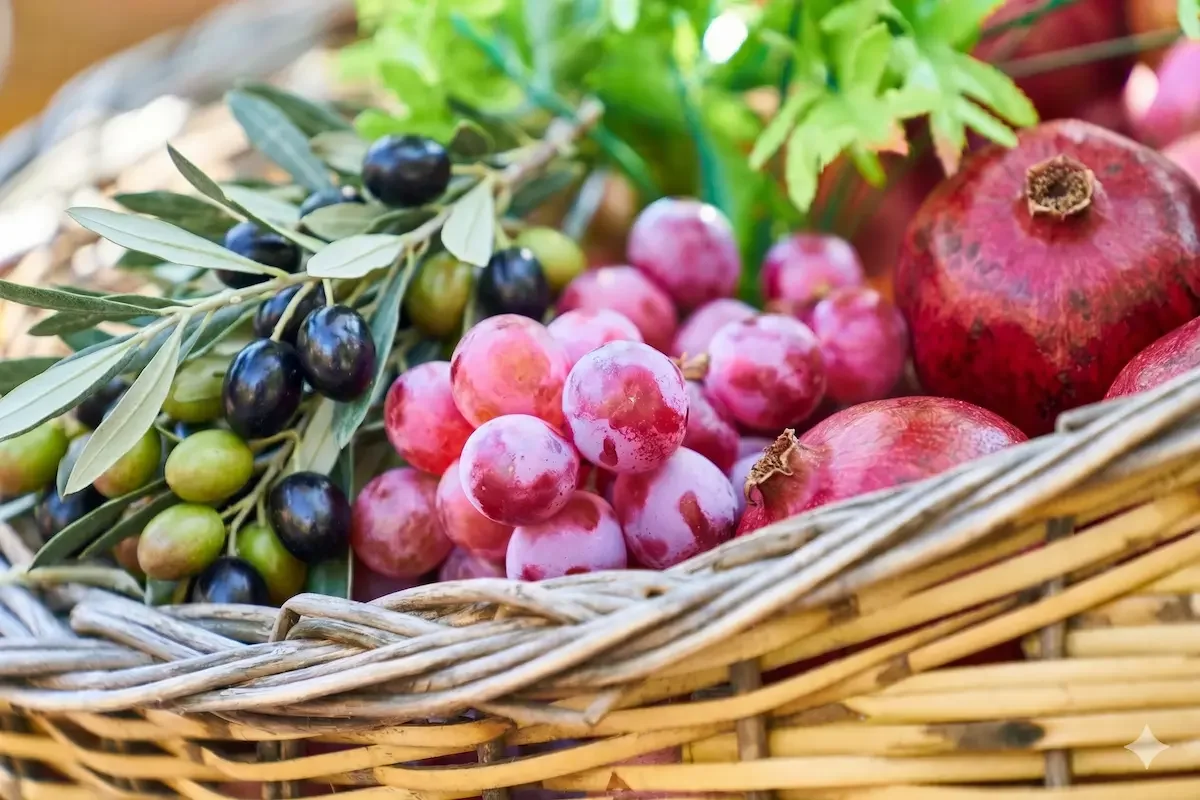
The Fig and the Olive
Scientific Context
Complementary Macronutrients and Metabolic Synergy
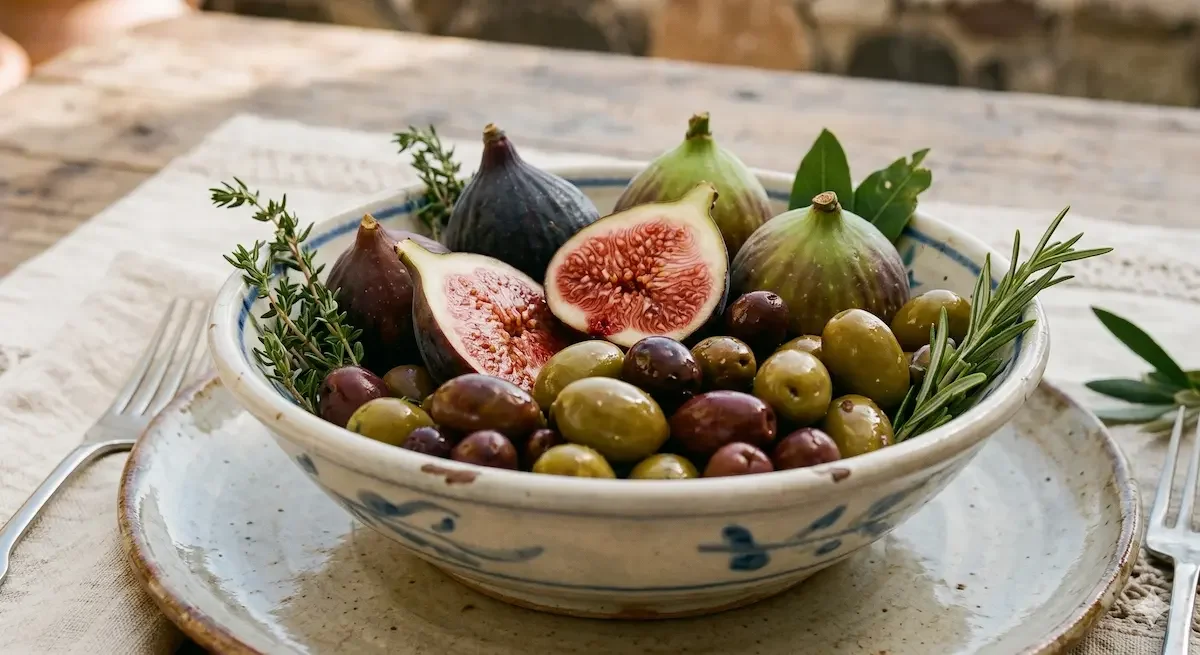
The fig and the olive have grown as companion crops in the Levant for over four thousand years. Archaeological evidence from ancient irrigation systems in the Jordan Valley shows they were cultivated together long before anyone understood why they worked so well as a nutritional pairing. Modern research has revealed that their combined consumption creates a metabolic synergy greater than either fruit alone.
Figs are carbohydrate-dense, providing primarily glucose and fructose for rapid energy. A 100-gram serving delivers approximately 232 calories alongside substantial fiber — particularly pectin, which feeds beneficial gut bacteria. Research from the University of Mississippi demonstrated that fig extracts specifically nourish Bifidobacterium and Lactobacillus species, increasing their populations by 15-20% in controlled trials. Figs also contain the enzyme ficin, which aids protein digestion, and phenolic compounds that protect against harmful cholesterol oxidation.
Olives and olive oil provide what figs lack: high-quality monounsaturated fats, mainly oleic acid. Extra virgin olive oil contains oleocanthal, a compound that reduces inflammatory enzymes. Its effect is comparable to low-dose ibuprofen — approximately 10% of the anti-inflammatory potency at standard dietary intake levels. Research published in the American Journal of Clinical Nutrition found that 25 mL of extra virgin olive oil daily reduced markers of harmful cholesterol oxidation by 13% over three weeks. Olive oil is also rich in vitamin E and polyphenols that protect cell membranes and support cardiovascular function.
The metabolic interaction between them is where the science becomes most relevant. The polyphenols and vitamin E in olive oil are fat-soluble compounds, meaning they require a lipid environment for optimal absorption in the digestive tract. The olive oil itself provides this environment, but the fig's carbohydrate matrix further facilitates their uptake by slowing digestion and extending contact time with the intestinal wall. Conversely, the healthy fats in olive oil improve absorption of calcium, magnesium, and iron from figs. A 2015 study at the University of Barcelona found that combining figs with olive oil increased absorption of fig-derived minerals by approximately 18% compared to fig consumption alone. This reciprocal enhancement creates a nutritional whole that approximates the 60:40 carbohydrate-to-fat ratio recommended for sustained energy in sports nutrition.
Islamic Context
وَالتِّينِ وَالزَّيْتُونِ
By the fig and the olive.
— Quran 95:1
Surah At-Tin opens with a powerful divine oath: Wa at-tīn wa az-zaytūn ("By the fig and the olive"). In the Quran, when Allah swears by an object, it directs human attention to its extraordinary significance and underlying design. The text does not present a sequence; it presents a deliberate pairing. The two nouns are joined by the conjunction wa (and), creating a permanent grammatical coupling that suggests relationship and interdependence rather than a mere list.
The classical scholars approached this pairing from two distinct angles: geographic and physiological. Ibn Kathir (d. 1373) noted the geographic anchor of the revelation, explaining that the fig represents the lands of Damascus and the olive represents Jerusalem, both territories of previous prophets. However, the scholars did not stop at that geography; they analyzed the physical properties of the fruits themselves to explain why they were coupled.
Fakhr al-Din al-Razi (d. 1210) devoted specific attention to the nutritional contrast in his Tafsir al-Kabir. He observed that the fig represents pure, immediate nourishment—a fruit so easily digested it leaves almost no waste in the body. In contrast, he noted that the olive provides the essential idām (the fat, seasoning, or lipid base). Al-Razi concluded that the divine oath pairs these two specifically because together they encompass the absolute totality of human dietary needs: the pure, sweet energy of the fruit and the dense, sustaining fat of the oil.
The 14th-century polymath and physician Ibn al-Qayyim expanded on this in his treatises on Prophetic Medicine. He evaluated both foods clinically, observing that the fig delivers rapid warmth and energy to the body, while the olive provides a necessary, balancing moisture and sustained vitality. One acts fast, the other acts long. Neither alone covers the entire spectrum of human nutritional need, but together they leave nothing out.
This is why the surah's overall structure is so deliberate. Just three verses after swearing by these complementary fruits, the Quran declares: "We have certainly created man in the best of forms" (Quran 95:4). Al-Qurtubi observed that this transition from physical food to human creation is profound. Before addressing the perfection of the human body, the text establishes the perfect provision designed to sustain it. The oath points directly to two distinct foods that biochemically complete one another, demonstrating a physical synergy in nature that perfectly matches the complex design of the human being.
Prev Post
Next Post
The Connection
The Quran elevates the fig and the olive by pairing them in a divine oath, presenting them not as isolated fruits but as a coupled unit. Modern nutritional biochemistry validates this exact pairing, revealing that the lipid matrix of the olive is biologically required to unlock and absorb the dense nutrients of the fig. Both the grammatical structure of the verse and the metabolic process of human digestion point to the same truth: these two foods are perfectly calibrated to complete one another.
Related Connections