Bioscience
Similar Yet Varied - Part 1
Scientific Context
The Synergy of Pomegranates, Olives and Grapes
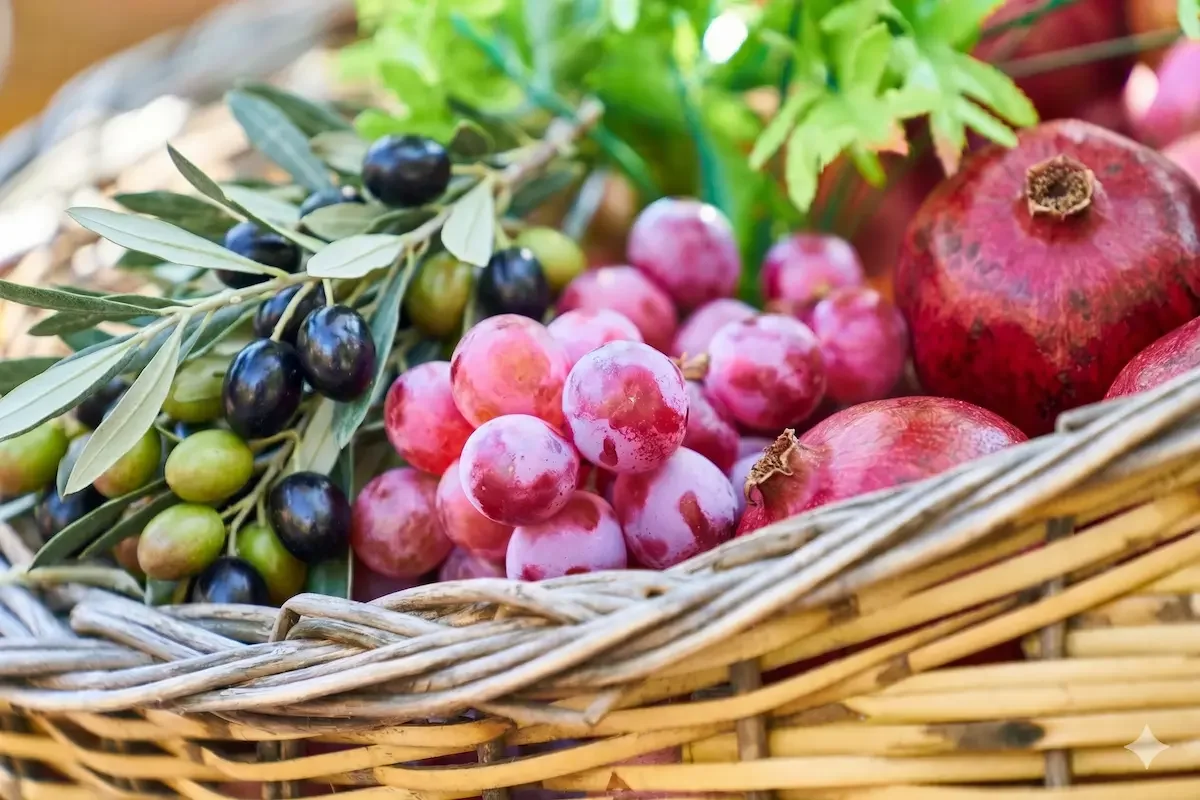
The Mediterranean and Middle Eastern agricultural landscape has featured pomegranates, grapes, and olives as companion crops for over 4,000 years. Archaeological evidence from ancient irrigation systems shows these fruits were cultivated together long before anyone understood why they worked so well as a combination. Modern research has revealed that their natural compounds protect the cardiovascular system through complementary mechanisms that enhance each other when consumed together.
Pomegranates contain powerful antioxidants that are roughly three times more effective than those found in green tea or red wine. A clinical trial published in the American Journal of Clinical Nutrition found that drinking just 50 mL of pomegranate juice daily reduced harmful cholesterol oxidation by 20% in healthy adults over two weeks. When cholesterol oxidizes, it triggers inflammation that leads to arterial plaque buildup. Pomegranate compounds also help relax blood vessels, reducing blood pressure by an amount comparable to low-dose medications.
Grapes work through a different pathway. Their skins contain resveratrol, a compound that activates genes involved in cellular repair and energy metabolism. Research from Harvard Medical School demonstrated that resveratrol improves mitochondrial function — the energy-producing structures within cells. Grapes also contain compounds that strengthen the walls of tiny blood vessels called capillaries, improving circulation to the brain, eyes, and extremities. A review of 23 clinical trials found that grape supplements significantly reduced blood pressure, with systolic readings dropping by an average of 3.5 mmHg.
Olives contribute yet another protective mechanism through compounds called oleuropein and hydroxytyrosol. Extra virgin olive oil contains high concentrations of these substances, and studies show that just 20 mL daily reduces cholesterol oxidation markers by 25% and improves blood vessel function. Olive compounds help the body produce nitric oxide — a natural molecule that relaxes and expands blood vessels — though through different cellular signals than grapes.
The real power of these three fruits emerges when they work together. Grape compounds stimulate the production of nitric oxide, which expands blood vessels and improves blood flow. Olive compounds activate alternative pathways that sustain nitric oxide production. However, nitric oxide is extremely short-lived in the body, lasting only 6-10 seconds before being destroyed by unstable molecules called free radicals. This is where pomegranate becomes essential: its antioxidants neutralize the free radicals that destroy nitric oxide, extending its beneficial effects. One fruit increases production, another sustains it, and the third prevents its destruction. Research combining extracts from all three fruits shows 50-70% greater improvement in blood vessel function than any single fruit alone.
Islamic Context
وَهُوَ الَّذِي أَنزَلَ مِنَ السَّمَاءِ مَاءً فَأَخْرَجْنَا بِهِ نَبَاتَ كُلِّ شَيْءٍ فَأَخْرَجْنَا مِنْهُ خَضِرًا نُّخْرِجُ مِنْهُ حَبًّا مُّتَرَاكِبًا وَمِنَ النَّخْلِ مِن طَلْعِهَا قِنْوَانٌ دَانِيَةٌ وَجَنَّاتٍ مِّنْ أَعْنَابٍ وَالزَّيْتُونَ وَالرُّمَّانَ مُشْتَبِهًا وَغَيْرَ مُتَشَابِهٍ انظُرُوا إِلَىٰ ثَمَرِهِ إِذَا أَثْمَرَ وَيَنْعِهِ إِنَّ فِي ذَٰلِكُمْ لَآيَاتٍ لِّقَوْمٍ يُؤْمِنُونَ
And it is He who sends down rain from the sky, and We produce thereby growth of all things. We produce from it greenery from which We produce grains arranged in layers. And from the palm trees—of its emerging fruit—are clusters hanging low. And gardens of grapevines and olives and pomegranates, similar yet varied. Look at its fruit when it yields and [at] its ripening. Indeed, in that are signs for a people who believe.
— Quran 6:99
Surah Al-An'am (6:99) presents a sweeping agricultural sequence describing how water from the sky produces vegetation, grains, palm clusters, and finally "gardens of grapevines and olives and pomegranates, similar yet varied." The grammatical structure anchoring this grouping uses two active participles derived from the verb shabaha, meaning to resemble or be alike. The first, mushtabihan, indicates similarity; the second, ghayra mutashābihin, adds negation (ghayr) to indicate distinction. This construction affirming similarity while simultaneously asserting difference, is a precise phrase that mirrors the biological dynamics of the plants.
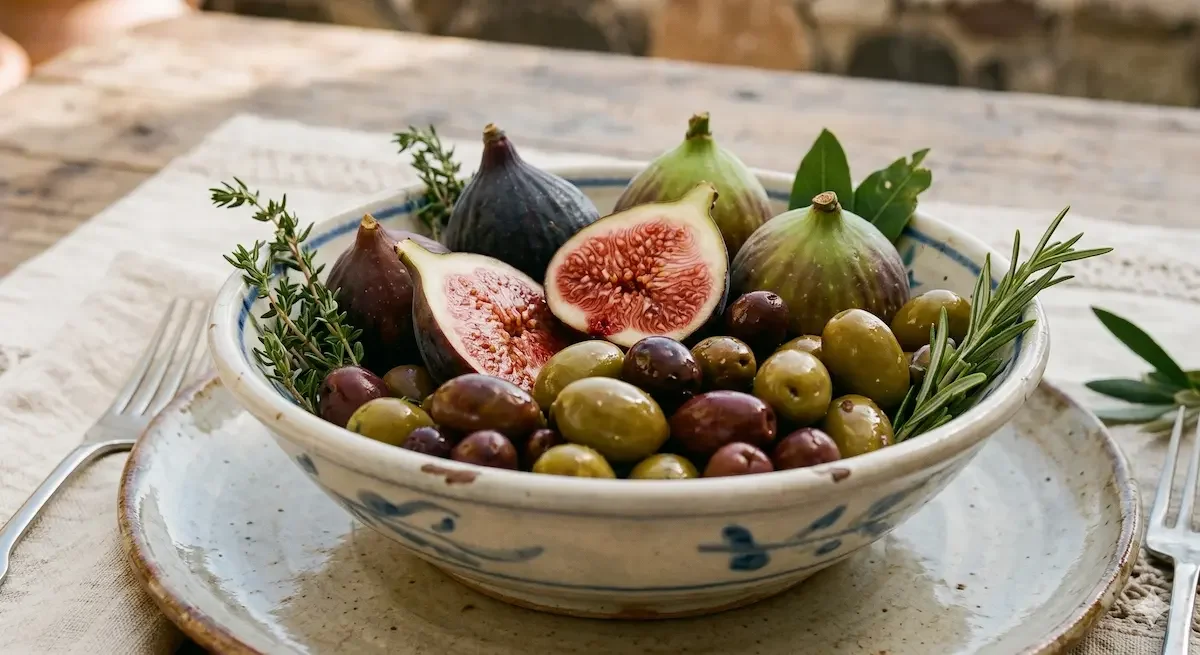
Quranic interpreters recognized that the grouping of these three specific fruits was not incidental. Qatadah observed the immediate botanical contrast: olive and pomegranate trees share remarkably similar leaves and branch structures. Ibn Abbas (d. 687) commented that as products of cultivated gardens, they are watered by the same rain and grown in the exact same earth, yet they yield fruits that are entirely distinct in color, taste, and internal composition. The text draws the reader's attention to this biological paradox—how a shared beginning in the same soil produces radically divergent outcomes.
Beyond their physical appearance, the classical tradition examined the functional grouping of this specific trio. In his medical treatises, the 14th-century scholar Ibn al-Qayyim noted their physiological synergy. He observed that together, these three fruits represent a complete spectrum of human dietary and medicinal needs. Grapes provide sweet, immediate energy; olives provide dense, sustaining fats; and pomegranates offer sharp, astringent medicine that clears the system. The phrasing of the verse perfectly captures this design. The fruits belong to the same garden and share a visual resemblance, yet each develops an entirely different internal mechanism to support the human body in complementary ways.
Prev Post
Next Post
The Connection
The Quran groups pomegranates, olives, and grapes together, describing them as visually similar but entirely distinct in their function. Centuries before modern medicine mapped cardiovascular pathways, classical scholars recognized this trio as a complete system of complementary physiological support. Today, clinical research reveals exactly how this variation functions, and how these three plants form a metabolic synergy to protect and sustain nitric oxide in the blood vessels.
Related Connections