Bioscience
Similar Yet Varied - Part 2
Scientific Context
The Biochemistry of Ripening
When a fruit first emerges on a branch, its biological priority is not to feed us—it is to survive. In its early developmental stage, a plant acts as a defensive fortress. Botanists have long understood that unripe fruit is deliberately flooded with harsh, astringent compounds to deter animals from consuming the seeds before they are viable. However, as the fruit transitions into its ripening phase, a profound biochemical inversion takes place. The plant stops prioritizing defense and deploys enzymes to convert those exact same bitter compounds into highly beneficial polyphenols and antioxidants.
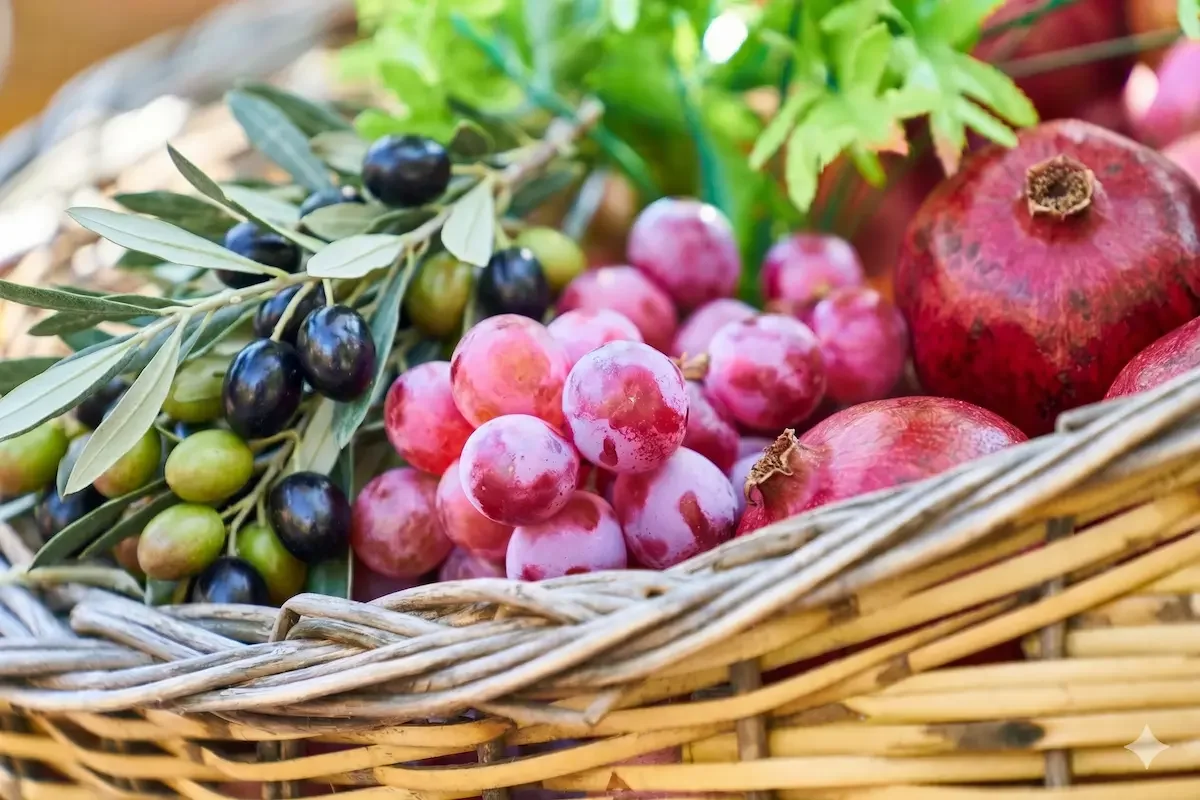
This chemical metamorphosis is highly specific, and modern agronomic studies have pinpointed exactly when it happens. In grapes, the onset of ripening is called veraison. Research published in the journal Plant Physiology demonstrates that before this stage, the genetic pathways responsible for creating beneficial antioxidants are virtually dormant; the berry is simply hard, green, and acidic. But at the exact moment of veraison, the plant triggers a metabolic switch. It halts physical growth and redirects its cellular energy to synthesize resveratrol—the compound celebrated for protecting human blood vessels. These vascular-protecting chemicals literally do not exist in meaningful quantities until this ripening sequence begins.
Olives undergo a similarly dramatic chemical shift. When an olive first emerges, it is packed with oleuropein, a defensive chemical so intensely bitter it makes the raw fruit entirely inedible. A comprehensive study published in Food Chemistry tracked the phenolic profile of olives over time, revealing that as the fruit ripens—turning from green to purple-black—the plant activates specific enzymes that break the oleuropein down into hydroxytyrosol. This newly formed compound is one of the most potent cholesterol-protecting antioxidants in nature, but it only emerges because of the ripening process.
Pomegranates experience a parallel transformation. Researchers analyzing the fruit's maturation cycle in the Journal of Agricultural and Food Chemistry found that unripe pomegranates rely heavily on dense, mouth-puckering tannins for protection. As the fruit reaches peak maturity, it undergoes a metabolic reprogramming that synthesizes punicalagins, the specific antioxidants responsible for their remarkable cardiovascular benefits. The transition from an unripe bud to a mature fruit is not merely a change in color; it is a precisely timed chemical factory, where the medicinal value of the plant depends entirely on the biochemical cascade of maturation.
Ultimately, the scientific consensus reveals that a fruit's medicinal value is not a static, permanent property—it is a strictly time-bound achievement. The profound cardiovascular benefits these plants offer simply do not exist in their early developmental stages. It is only during this precise window of maturation, when the plant's biological imperative shifts from guarding its seeds to nourishing a consumer, that defensive chemistry is finally transmuted into life-sustaining medicine.
Islamic Context
وَهُوَ الَّذِي أَنزَلَ مِنَ السَّمَاءِ مَاءً فَأَخْرَجْنَا بِهِ نَبَاتَ كُلِّ شَيْءٍ فَأَخْرَجْنَا مِنْهُ خَضِرًا نُّخْرِجُ مِنْهُ حَبًّا مُّتَرَاكِبًا وَمِنَ النَّخْلِ مِن طَلْعِهَا قِنْوَانٌ دَانِيَةٌ وَجَنَّاتٍ مِّنْ أَعْنَابٍ وَالزَّيْتُونَ وَالرُّمَّانَ مُشْتَبِهًا وَغَيْرَ مُتَشَابِهٍ انظُرُوا إِلَىٰ ثَمَرِهِ إِذَا أَثْمَرَ وَيَنْعِهِ إِنَّ فِي ذَٰلِكُمْ لَآيَاتٍ لِّقَوْمٍ يُؤْمِنُونَ
And it is He who sends down rain from the sky, and We produce thereby growth of all things. We produce from it greenery from which We produce grains arranged in layers. And from the palm trees—of its emerging fruit—are clusters hanging low. And gardens of grapevines and olives and pomegranates, similar yet varied. Look at its fruit when it yields and [at] its ripening. Indeed, in that are signs for a people who believe.
— Quran 6:99
Surah Al-An'am (6:99) concludes its sweeping description of agricultural growth with a highly specific, time-bound command, "...Look at its fruit when it yields and at its ripening. Indeed, in that are signs for a people who believe." Rather than presenting the finished fruit as a static object, the verse directs human attention to the developmental timeline of the plant. The imperative unẓurū (look or observe) asks the reader to examine two distinct, sequential stages: ithmār, the initial emergence of the fruit, and yanʿ, its final stage of ripening.
The linguistic precision of this pairing focuses entirely on transformation. The word ithmār derives from the verb athamara, which signifies the exact moment the tree first yields or produces the fruit—the stage when it is just a hard, protective knot on the branch. In contrast, yanʿ derives from the verb yanaʿa, which carries the meaning of reaching maturity, completion, or the absolute peak of readiness. In classical Arabic terminology, yanaʿa does not merely mean turning a certain color; it refers to the exact stage when a fruit achieves its maximum softness, sweetness, and nutritional utility.
Classical commentators recognized that the theological sign lay strictly in the transition between these two words. Al-Razi (d. 1210) devoted deep attention to this specific command, observing that the miracle of the fruit is entirely located in its metamorphosis. He pointed out that during the ripening phase, the fruit undergoes a triad of dramatic physical changes: a shift in texture (from hard to soft), a shift in taste (from sour and bitter to sweet), and a shift in appearance (from green to vibrant colors). Al-Razi noted that this could not simply be the result of the sun and soil, because the environment remains the same; rather, it is a highly specific, engineered internal process that activates only at the right time.
Al-Qurtubi expanded on this, noting the hidden nature of the transition. He observed that the verse commands us to watch how a fruit begins as something bitter and completely inedible, only to be gradually transformed by an unseen mechanism into something life-sustaining. You water the tree and see the hard green bulb emerge, but the plant fundamentally alters its own internal composition without any further human intervention. The text does not simply ask the reader to notice that the fruits exist. It points directly to the biological factory inside them—the fact that the plant fundamentally rewrites its own chemistry between the moment the fruit emerges and the moment it reaches its peak.
Prev Post
Next Post
The Connection
The Quran directs human observation not just to the existence of fruit, but specifically to the metabolic transformation between its initial emergence and its final ripening. Modern plant physiology has tracked this exact window, revealing it as a period of profound biochemical inversion where a plant converts harsh defensive chemicals into vital, life-sustaining nutrients. Both the textual command and the scientific consensus ultimately isolate the exact same phenomenon: the precise, time-bound window where a plant fundamentally rewrites its own chemistry to sustain human life.
Related Connections