Bioscience
Between Chyme and Blood
Scientific Context
The Biological Filtration of Milk
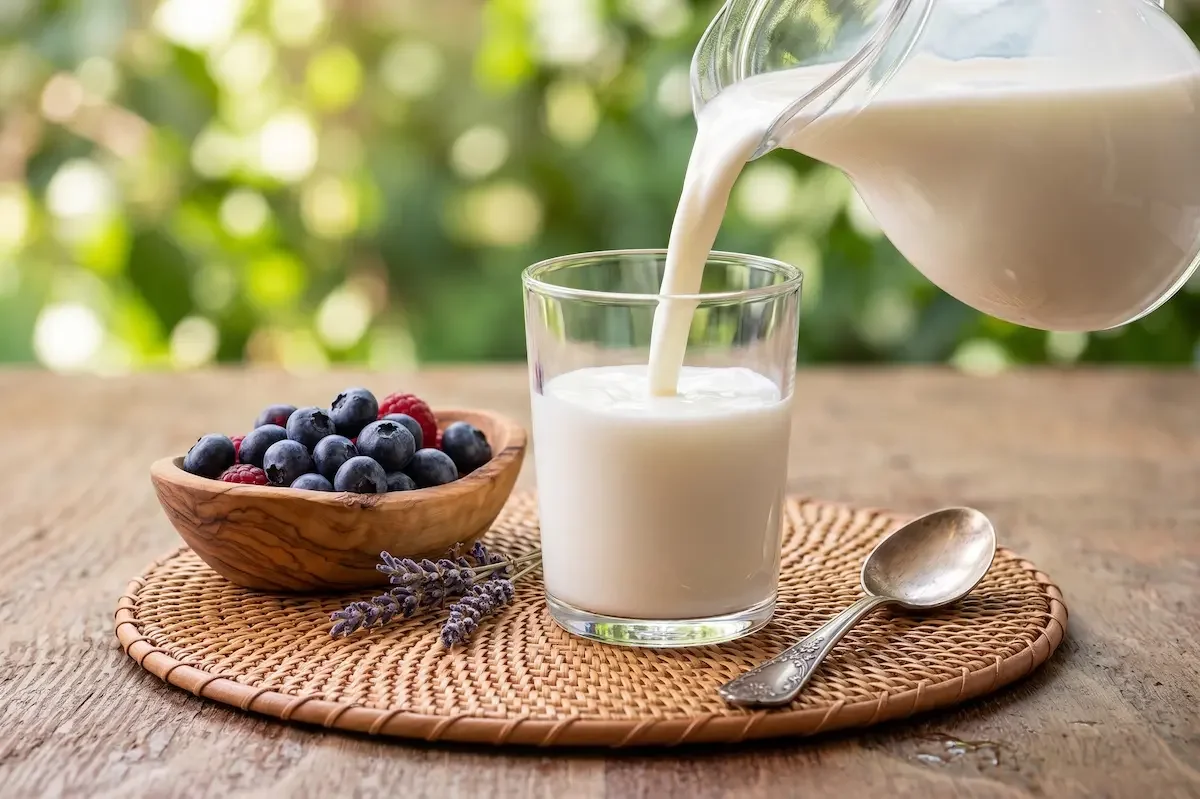
Milk production is one of the most rigorous biological filtration processes in nature. To produce just one liter of milk, approximately 400 to 500 liters of blood must circulate through the mammary gland. This remarkable ratio highlights the extreme selectivity of the system: the blood carries a vast mix of nutrients, but the gland must extract only exactly what is needed while aggressively excluding everything else.
The process bridges two distinct physiological systems. Grazing animals consume plant material that microbes in the rumen break down into volatile fatty acids and amino acids. These nutrients pass through the intestinal wall into the bloodstream, joining with absorbed water and vitamins. At this stage, the blood is carrying a complex cargo—both the useful nutritional building blocks from the gut and the metabolic waste products generated by cellular functions.
When this blood reaches the udder, specialized structures called mammary epithelial cells act as a biological tollbooth. These cells deploy active transport mechanisms that pull water, amino acids, and sugars out of the blood while simultaneously blocking waste products, toxins, and the raw contents of the digestive tract. The filtration is so precise that the harmful or unusable substances circulating in the blood are locked out entirely.
The result is a completely isolated, nutrient-dense fluid. Consisting of roughly 87 percent water for hydration and 13 percent solids, it delivers proteins for sustained energy, fats suspended in protective membranes, and highly bioavailable minerals. It emerges as a pure, comprehensive nutritional package despite originating from blood that carries both life-sustaining nutrients and biological waste.
Islamic Context
وَإِنَّ لَكُمْ فِي الْأَنْعَامِ لَعِبْرَةً نُّسْقِيكُم مِّمَّا فِي بُطُونِهِ مِن بَيْنِ فَرْثٍ وَدَمٍ لَّبَنًا خَالِصًا سَائِغًا لِّلشَّارِبِينَ
And indeed, for you in grazing livestock is a lesson. We give you drink from what is in their bellies—from between chyme and blood—pure milk, palatable to those who drink.
— Quran 16:66
This verse employs the phrase "from between chyme (partially digested food) and blood." The preposition min (from) combined with bayn (between) creates a distinct spatial and conceptual boundary. The text states that milk emerges not from a single source, but directly from the space separating two distinct biological systems.
Ibn Abbas (d. 687) explained that the verse locates the origin of milk exactly between the digestive tract, where waste (farth) accumulates, and the circulatory system, where blood (dam) flows. The word farth specifically refers to the contents of the intestines—partially digested food mixed with waste—while dam denotes the circulating blood. Al-Qurtubi (d. 1273) noted that the verse invites the reader to reflect on how a perfectly clean fluid is extracted from the intersection of these two systems, while remaining entirely untouched by either. The verse does not say milk comes "from blood" or "from digested food," but carefully positions it as an extraction taking place between them.
The text describes the resulting fluid as khāliṣan (pure) and sāʾighan (palatable). The word khāliṣan derives from the verb khalasa, meaning to be completely freed from admixture, unadulterated, or purified. In this context, it emphasizes that the milk emerges entirely free from the waste products present in the gut and the unwanted components circulating in the blood. The term sāʾighan indicates that the fluid is naturally agreeable to the throat—requiring no further purification or processing before consumption.
The verse opens by framing this entire process as an ʿibrah (a lesson). The word implies deriving deep understanding through careful observation. It directs attention to an everyday phenomenon—drinking milk—and elevates it to a sign worthy of scientific contemplation: the extraction of a pure, nourishing fluid from the complex, chaotic interaction of digestion and circulation.
Prev Post
Next Post
The Connection
The Quran describes milk not as a direct product of digestion or circulation, but as a purified extraction drawn from the precise boundary between the two. Modern veterinary physiology maps this exact dynamic, revealing how mammary cells act as a highly selective barrier, pulling nutrients from the bloodstream while locking out the metabolic waste of the gut. Both the textual phrasing and the biology identify the same mechanism: a highly specific filtration system operating in the narrow space between blood and digestion.
Related Connections