Bioscience
A Disease and a Cure
Scientific Context
Antimicrobial Defences of the Common Fly
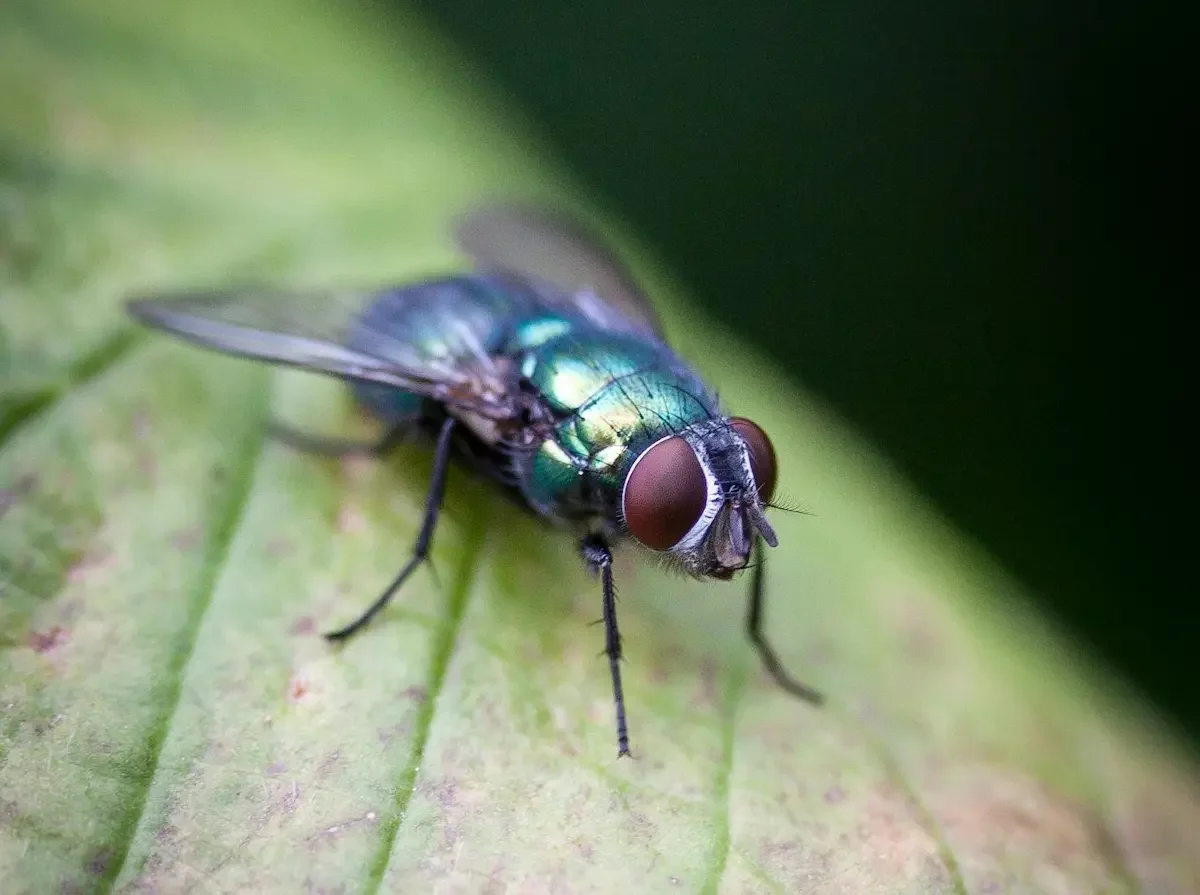
Flies have long been recognized as vectors of disease. They feed on decaying organic matter, faeces, and refuse, picking up pathogenic bacteria such as Escherichia coli, Salmonella, and Staphylococcus aureus on their bodies. When a fly lands on human food or drink, it can transfer these microorganisms, potentially causing serious infections. Conventional microbiology has consistently warned against allowing flies near consumables.
Yet beneath this well-documented threat lies a remarkable biological paradox. Because flies inhabit environments teeming with bacteria, they have evolved extraordinarily potent antimicrobial defenses to survive. Research led by Dr. Joan Clarke and colleagues at Macquarie University in Australia demonstrated that flies produce powerful surface antibiotics—antimicrobial peptides and compounds that coat their bodies and protect them from the pathogens in their surroundings. These natural biocides are potent enough to inhibit the growth of bacteria that would otherwise overwhelm most organisms.
Further research into insect immunology reveals that this defense is not merely a static shield, but a dynamic, real-time chemical response. When a fly encounters a pathogen, sensory receptors immediately trigger specific genetic signaling pathways. This induced immune response forces the fly's body to rapidly synthesize targeted antimicrobial peptides on demand. The insect acts as a real-time biological pharmacy, manufacturing the exact compound needed to neutralize the specific bacteria it just encountered.
Modern biotechnology has turned its attention to isolating these dynamic antimicrobial compounds. The peptides produced by flies and other insects represent a promising frontier in the search for pharmaceutical applications, particularly as conventional antibiotics face growing global resistance.
Islamic Context
عَنْ أَبِي هُرَيْرَةَ رَضِيَ اللَّهُ عَنْهُ: أَنَّ رَسُولَ اللَّهِ ﷺ قَالَ: «إِذَا وَقَعَ الذُّبَابُ فِي إِنَاءِ أَحَدِكُمْ فَلْيَغْمِسْهُ كُلَّهُ ثُمَّ لْيَطْرَحْهُ فَإِنَّ فِي أَحَدِ جَنَاحَيْهِ دَاءً وَفِي الآخَرِ شِفَاءً»
If a fly falls into the drink of any one of you, he should dip it (in the drink) and then take it out, for in one of its wings there is a disease and in the other there is a cure.
— Hadith Sahih al-Bukhari 3320, Sahih Muslim 2241
This narration is classified as muttafaq alayh—agreed upon by both al-Bukhari and Muslim. For classical scholars, the text presented a striking linguistic and practical claim. The Arabic phrasing establishes a precise duality: the word dā’ (disease or harm) is structurally balanced against shifā’ (cure or remedy). The statement makes a direct claim about the physical body of the insect carrying both elements simultaneously.
The practical instruction to submerge the fly prompted extensive analysis, as it appears counter-intuitive to basic hygiene. Imam Ibn Hajar al-Asqalani, in his commentary Fath al-Bari, observed that the specific command implies a physical necessity. The act of dipping is prescribed to release the shifā’ so that it meets the dā’. For Ibn Hajar, the text outlines a hidden equilibrium within the creature, where the remedy must be deliberately introduced to the surrounding liquid to counteract the harm already deposited.
Ibn al-Qayyim approached the text as a lesson in the complexity of the created world. He noted that human observation frequently stops at the surface, recognizing the fly only as a pest. The prophetic command forces the listener to acknowledge layers of physical reality that operate beyond immediate perception, establishing that even the most dismissed creatures carry both a threat and its specific remedy within a single frame.
Prev Post
Next Post
The Connection
The authenticated hadith describes a specific duality: a creature carrying both a disease and its active remedy within a single physical frame. Modern entomology outlines the same biological paradox, demonstrating that flies are not merely vectors for pathogens, but active systems that rapidly synthesize targeted antimicrobial compounds on demand. The classical text's description of an organism equipped with its own internal counterbalance is parallel to the modern understanding of this real-time immune response.
Related Connections