Bioscience
The Dead Earth
Scientific Context
The Resurrection of Desert Ecosystems
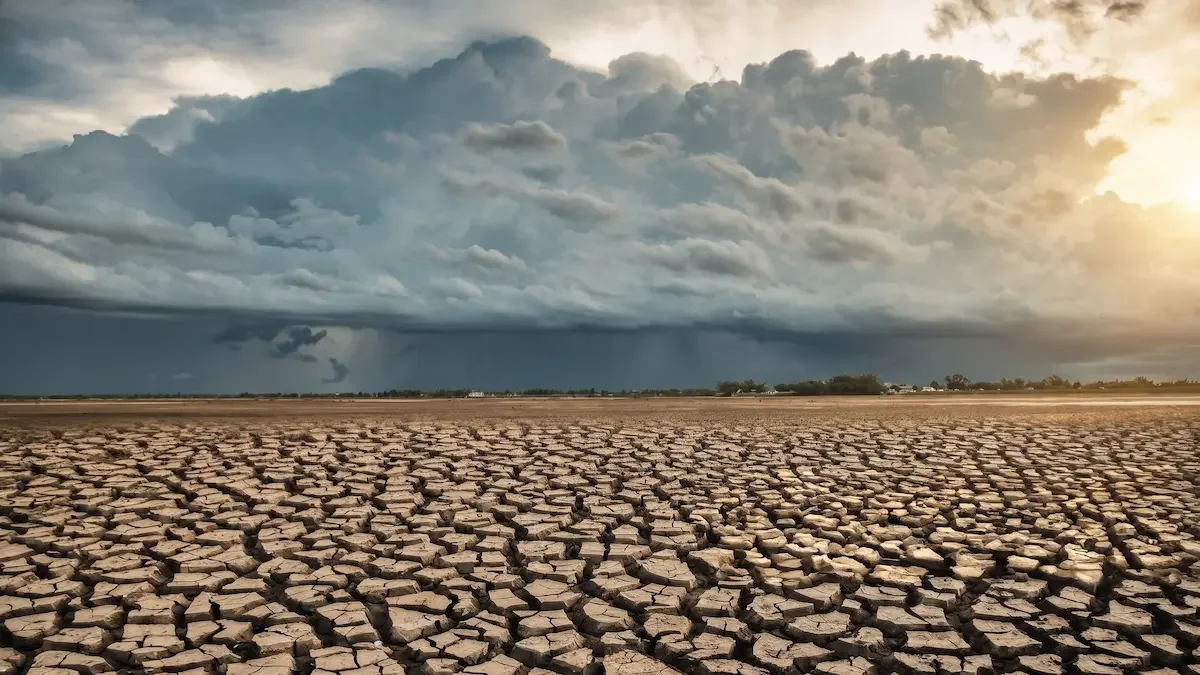
Some of the most extreme environments on Earth are not lifeless; they are merely waiting. In the Atacama Desert of northern Chile—the driest non-polar desert in the world, where rainfall averages less than one millimeter per year—the ground appears utterly barren. Yet beneath the surface lies a hidden biological reservoir: thousands of tonnes of seeds from over 200 plant species lie dormant, some surviving for decades. When rare El Niño rains deliver sufficient moisture, these seeds germinate within days. The phenomenon, known locally as desierto florido (flowering desert), transforms a landscape that NASA uses as a Martian soil analogue into one of Earth's most spectacular floral displays.
Similar events occur in Death Valley, California—officially the hottest place on Earth. The valley floor normally supports almost no visible plant life. Yet the soil contains a massive seed bank. Each seed is coated with chemical inhibitors that prevent germination until moisture, temperature, and light align precisely. When an unusually wet winter delivers enough rain to penetrate the soil matrix, the inhibitors leach away, allowing the seeds to imbibe water and reactivate dormant metabolic pathways. The result is a "superbloom"—millions of flowers erupting simultaneously across hundreds of square kilometers, as seen in the historic blooms of 2005 and 2016.
This seed dormancy is an active, genetically programmed survival strategy. A dormant seed maintains an extremely low water content, its cellular architecture locked in place by specialized sugars and proteins that prevent its membranes from denaturing during decades of desiccation. The seed coat acts as an armored vault. But once activated by water, the embryo synthesizes hormones that mobilize stored starches and lipids, generating the massive burst of energy required to rupture the seed coat, push roots downward, and send shoots upward. Within days, a landscape that appeared entirely dead is photosynthesizing and reproducing—a resurrection at the ecosystem scale.
Islamic Context
وَمِنْ آيَاتِهِ أَنَّكَ تَرَى الْأَرْضَ خَاشِعَةً فَإِذَا أَنزَلْنَا عَلَيْهَا الْمَاءَ اهْتَزَّتْ وَرَبَتْ إِنَّ الَّذِي أَحْيَاهَا لَمُحْيِي الْمَوْتَىٰ إِنَّهُ عَلَىٰ كُلِّ شَيْءٍ قَدِيرٌ
And among His signs is that you see the earth devoid of life, but as soon as We send down rain upon it, it begins to stir and swell. Indeed, the One Who revives it can easily revive the dead. He is certainly Most Capable of everything.
— Quran 41:39
The process begins with the earth in a state of khashi'ah. In Arabic, this word is typically used to describe a person in a state of deep, reverent stillness or submission. The Andalusian scholar Ibn 'Ashur (d. 1973) noted how profound this linguistic choice is: the verse does not call the desert "dead" (maytah); it calls it "reverent." It describes an ecosystem that has simply lowered its gaze and paused its activity, perfectly capturing the biological state of a landscape that is not devoid of life, but merely dormant and waiting for a physical trigger.
When the water finally hits the soil, the text shifts to highly dynamic, mechanical vocabulary. The earth ihtazzat (stirs, quivers) and rabat (swells, rises). Quranic commentators recognized that this was not just poetic imagery, but a description of physical movement occurring beneath the surface. Al-Razi (d. 1210) and Al-Zamakhshari both explained that ihtazzat describes the imperceptible vibrations and shifting of the soil as water rapidly permeates the dry crust and the seeds begin to move.
This quivering is immediately followed by rabat—the physical swelling of the ground. Al-Qurtubi (d. 1273) noted that when parched earth absorbs water, it expands. But Al-Razi took it a step further, explaining that the earth literally rises because the countless seeds buried within it are imbibing water, increasing in volume, and pushing the soil upward as they prepare to break the surface. The Quran describes a precise botanical sequence: the stillness of the seed bank, the sudden agitation of the soil upon hydration, and the physical swelling of the seeds before the plant emerges.
The verse explicitly roots this argument in empirical observation (tarā — "you see"). Only after establishing this highly accurate sequence of biological revival does the verse deliver its theological conclusion: "Indeed, He who has given it life is the Giver of Life to the dead." By drawing attention to the sequential mechanics of how dry earth and dormant seeds physically react to water, the Qur'an grounds the promise of the afterlife in a biological process that can be observed and measured.
Prev Post
Next Post
The Connection
The Qur'an describes barren earth not as a lifeless void, but as khashi'ah—a stilled environment that physically quivers (ihtazzat) and swells (rabat) when pierced by rain. Modern ecology maps perfectly onto this sequence: deserts are hidden reservoirs of dormant seeds that rapidly imbibe water, swell in volume, and cause the soil to shift with explosive upward growth. The biological reality of the desert superbloom provides empirical proof that apparent death is often just a state of pause, needing only a single trigger to resurrect.
Related Connections